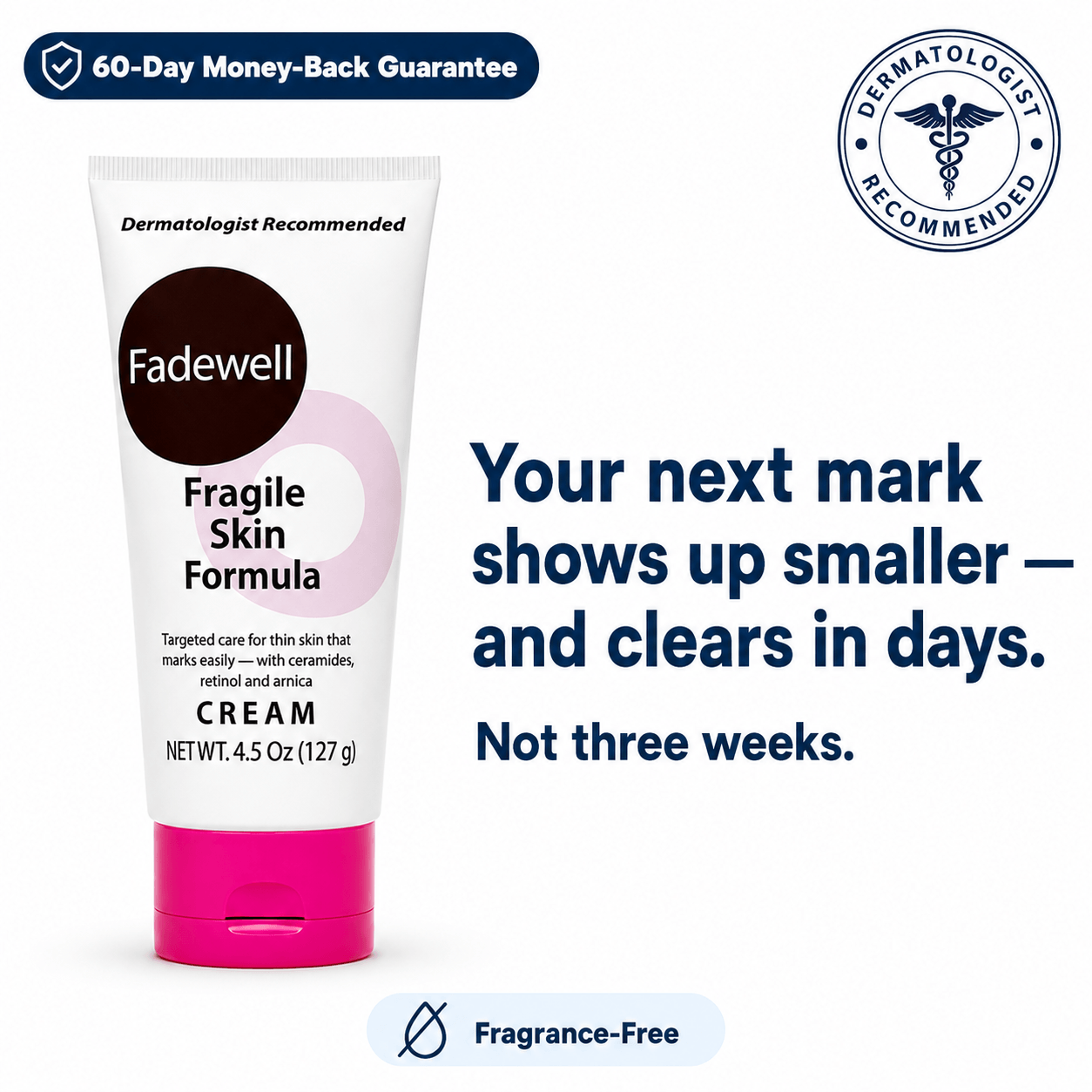






A Cream Made For Solar Purpura: Marks Fade In Days, Fewer Turn Up, Skin Gets Thicker And Softer
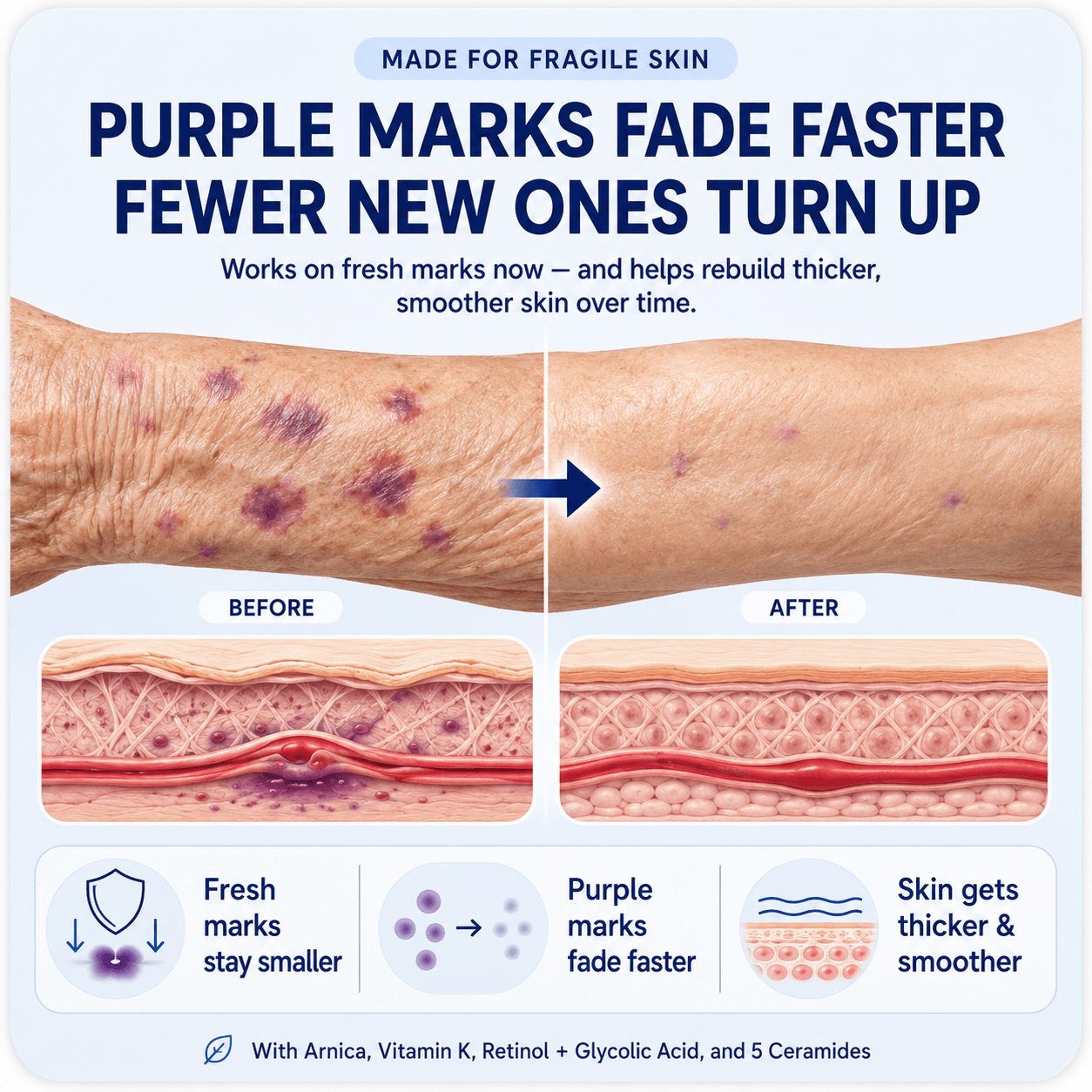
The next mark that turns up fades in days instead of weeks — and over two to three months your skin thickens, so fewer start in the first place.
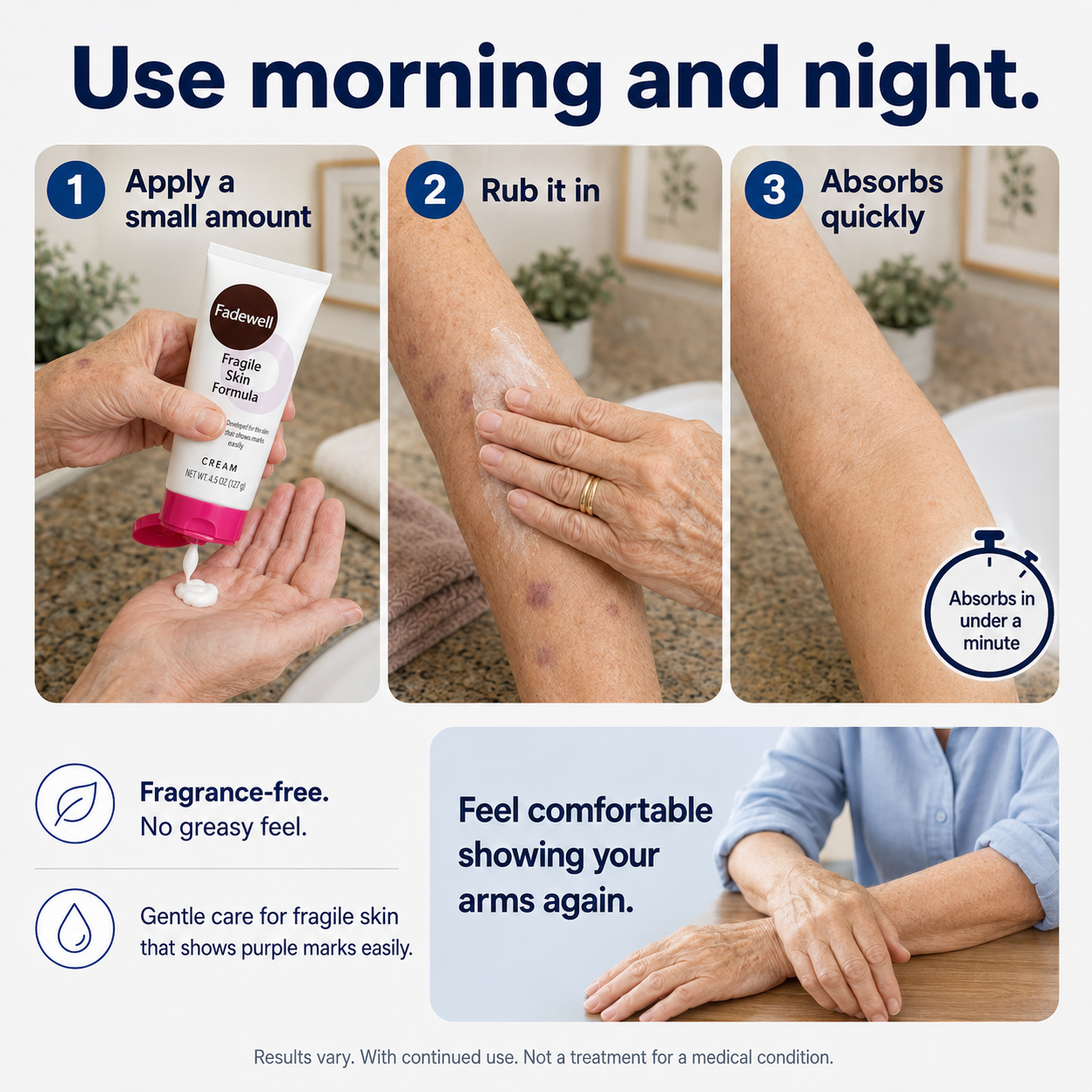
Both arms, both hands, twice a day — like brushing your teeth.
Limited Time Offer
Buy 1

$34.99
Most Popular
Buy 2

$49.99
Buy 3

$69.99
By default, your selected package will continue to be shipped and billed automatically at the stated frequency unless you choose to skip, pause, cancel, or select the one-time purchase option below.
Refilled every 2 months
Skip, Pause, or Cancel Anytime
60-Day Money Back Guarantee
Love your results within 60 days or get 100% of your money back.
Four separate things have gone wrong with this skin. It works on all four.
1. The surface has nothing left. Your skin is a brick wall and the mortar has run out — that’s the papery feel. Five ceramides, cholesterol and a fatty acid put it back.
2. The tissue underneath is inflamed. Decades of sun leave a low, permanent redness. Niacinamide calms it.
3. The cushion around your blood vessels wore away. Retinol and glycolic acid build it back over a full sixty days. The skin gets thicker, the vessels stop snapping so easily — and fewer marks turn up in the first place.
4. The bleed runs unchecked. Vitamin K pens the blood in when a fresh mark starts, so it comes out small and faint. Arnica montana moves the blood already pooled, so there’s less to carry and less time to stain.
The collagen that cushioned every tiny blood vessel — think bubble wrap around a glass straw — dissolved after decades of sun. So ordinary contact snaps a vessel, and you don’t remember doing anything because you didn’t.
And the cleanup crew that clears a bruise in a younger person is running weeks behind in yours. The blue-green-yellow you never see is that cleanup. So the blood just sits, and a mark takes up to three weeks to go — while new ones keep landing inside that window. What’s on your arm right now isn’t one mark. It’s every mark from the last three weeks, at once.
That’s not clumsiness — and moving that sitting blood out sooner is exactly what the arnica in this tube is for. The full story is further down the page.
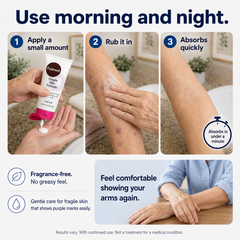
Both forearms and the backs of your hands. The whole surface, not just the purple parts. The moment a new mark turns up, it’s already being worked on — and so is every other one on there. A cream dabbed on one spot treats one spot.
Work it in fully — sleeves go straight over it.
And use a sunscreen on the arms you’ve treated. Retinol and glycolic acid make skin more sensitive to sun while you use them and for a week after — and sun is what caused this in the first place. Sleeves count. So does shade.
In the first few days. It stops feeling like paper. Sleeves, bedsheets and the dog’s paw slide over your arm instead of dragging on it. The tightness and itch settle down.
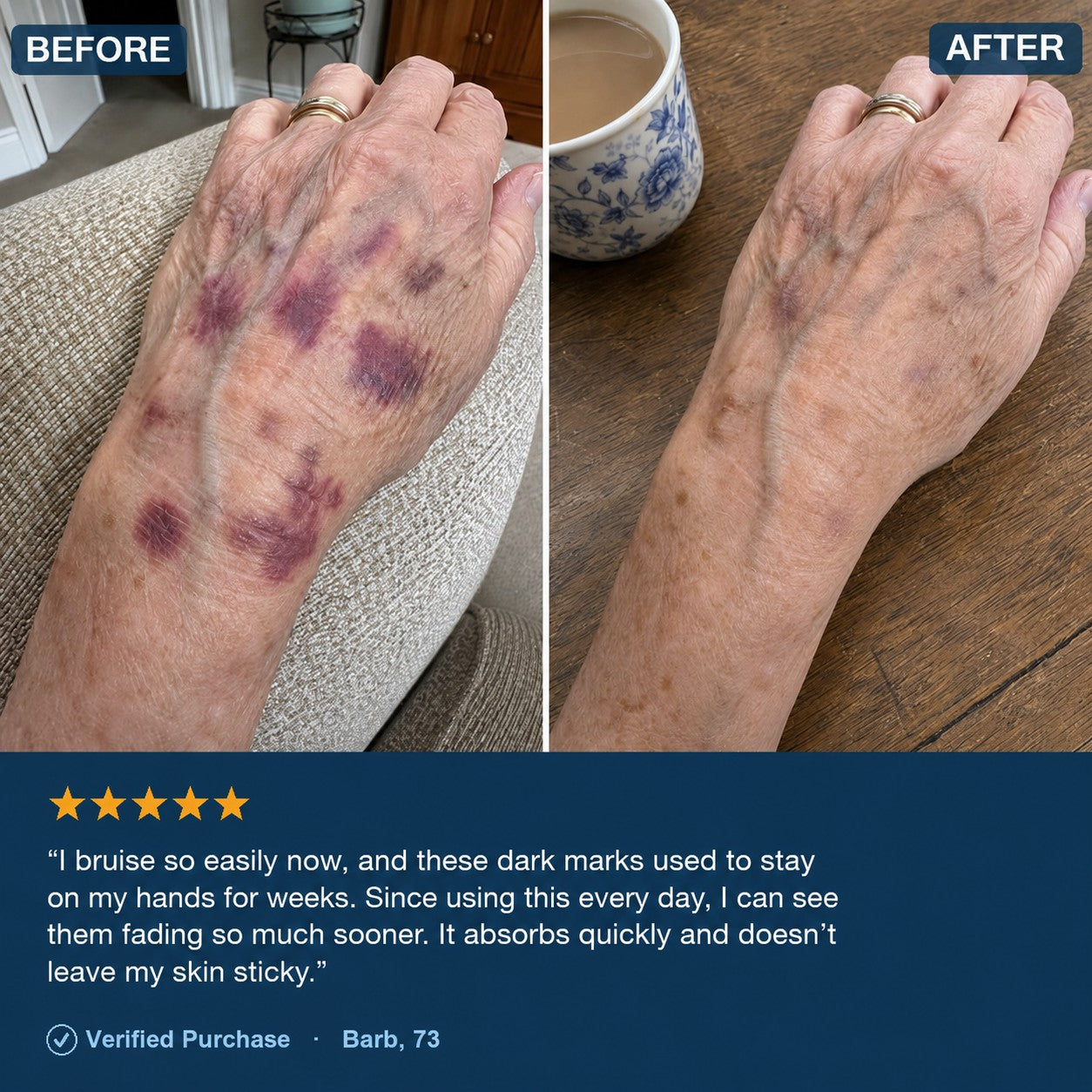
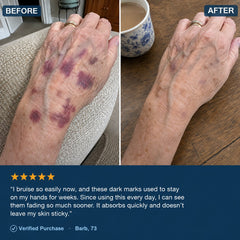
Weeks one and two — this is the change you’ll actually notice. The next mark that turns up comes in smaller and fainter, and it goes in days instead of sitting there for three weeks. And because each one now leaves faster than new ones arrive, fewer of them sit on your arm at the same time.
Weeks three and four. Older brown patches start to lighten.
Months two and three. The cushion is back, the skin is thicker — and fewer marks turn up in the first place.
Why the first week looks slow. A mark that’s two weeks old is mostly deposited iron — little blood left to move. A mark caught on day one still has blood to clear. That’s why the fresh ones go faster, and why the whole arm gets covered twice a day.
It’s paired with five ceramides, cholesterol and a fatty acid — rebuilding the surface while the retinol works underneath it.
It is not a steroid, and there is nothing in it that thins skin.
There’s a real trial behind that, and it is worth knowing where it stops. In a six-month study, nearly a thousand older adults worked a plain unscented moisturizer into their arms and legs twice a day, and skin tears dropped by almost half. Real result. Nobody measured the marks — because a lotion has nothing in it that could touch them.
That is the ceiling. A lotion cannot calm the redness the sun left underneath. It cannot build back the cushion that held your vessels steady. And it cannot touch the bleed — pen a fresh mark in, or move pooled blood before it turns brown. Those are the other three, and they are what the niacinamide, the retinol and glycolic acid, the vitamin K and the arnica are for.
If sixty days in you don’t think it was worth it, email us and we’ll refund you in full.
Two steps: email us, get your money back.
Why Trust Fadewell
Fewer At Once. Fewer Turning Up. Soft Skin Again.
We asked 1,132 customers what changed. These are their answers.
Fewer Marks At Once
91%Said fewer were on their arms at the same time.Fewer Marks By Month Three
89%Said they had at least 75% fewer marks after three months.Would Buy It Again
92%Ordered again after their first tube.Asked For A Refund
Under 1%In the 60-day window.From a survey of 1,132 verified Fadewell customers. Individual results vary.
Try Fadewell Risk-Free 60-day money-back guaranteeFour Clinically-Studied Compounds. One Cream: Fewer Marks, Softer Skin.
Two go after the marks themselves. One changes why they start. One rebuilds the surface they land on.
True Arnica montana
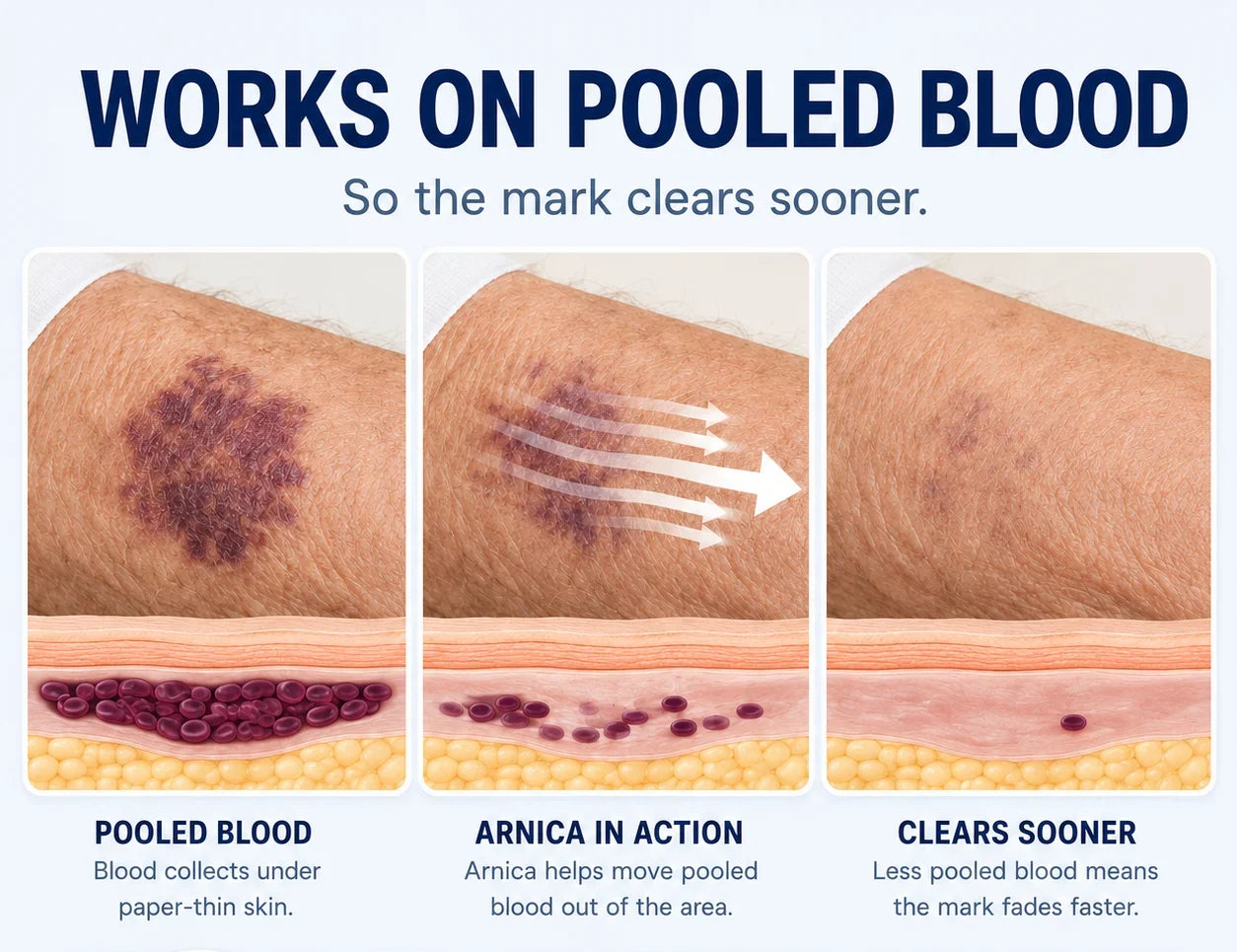
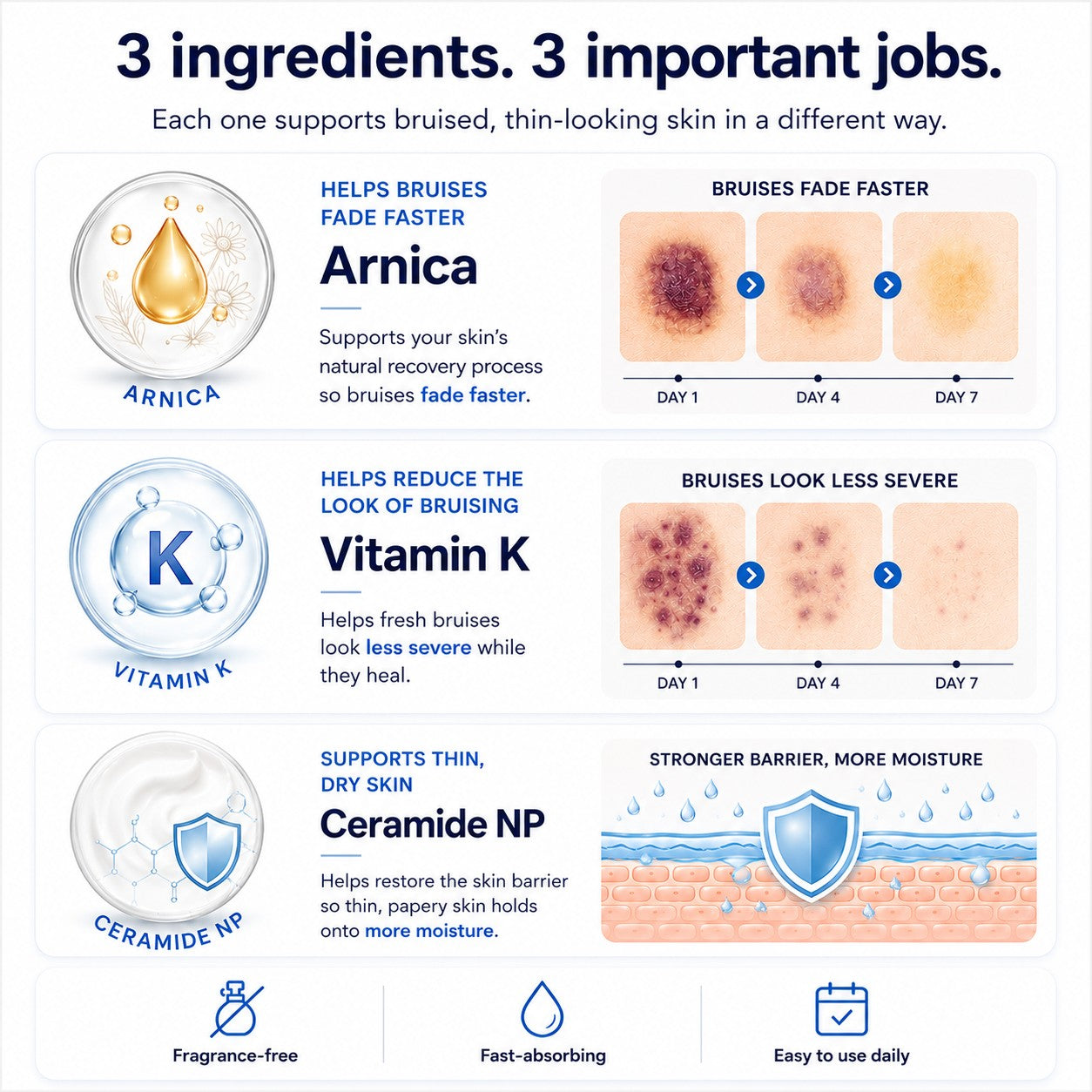
A mark is blood pooled under the skin. Left sitting, it breaks down into iron — that’s the brown stain. Arnica moves the pooled blood out sooner, so there’s less left behind to stain.
Real arnica is a protected mountain flower that grows above the treeline. The cheap lowland cousin carries only a fraction of what makes it work — and it can still say “Arnica” on the box. Ours is true Arnica montana.
Researchers applied arnica to bruising that had already appeared. It cleared faster than the same cream base with no arnica in it.
Vitamin K
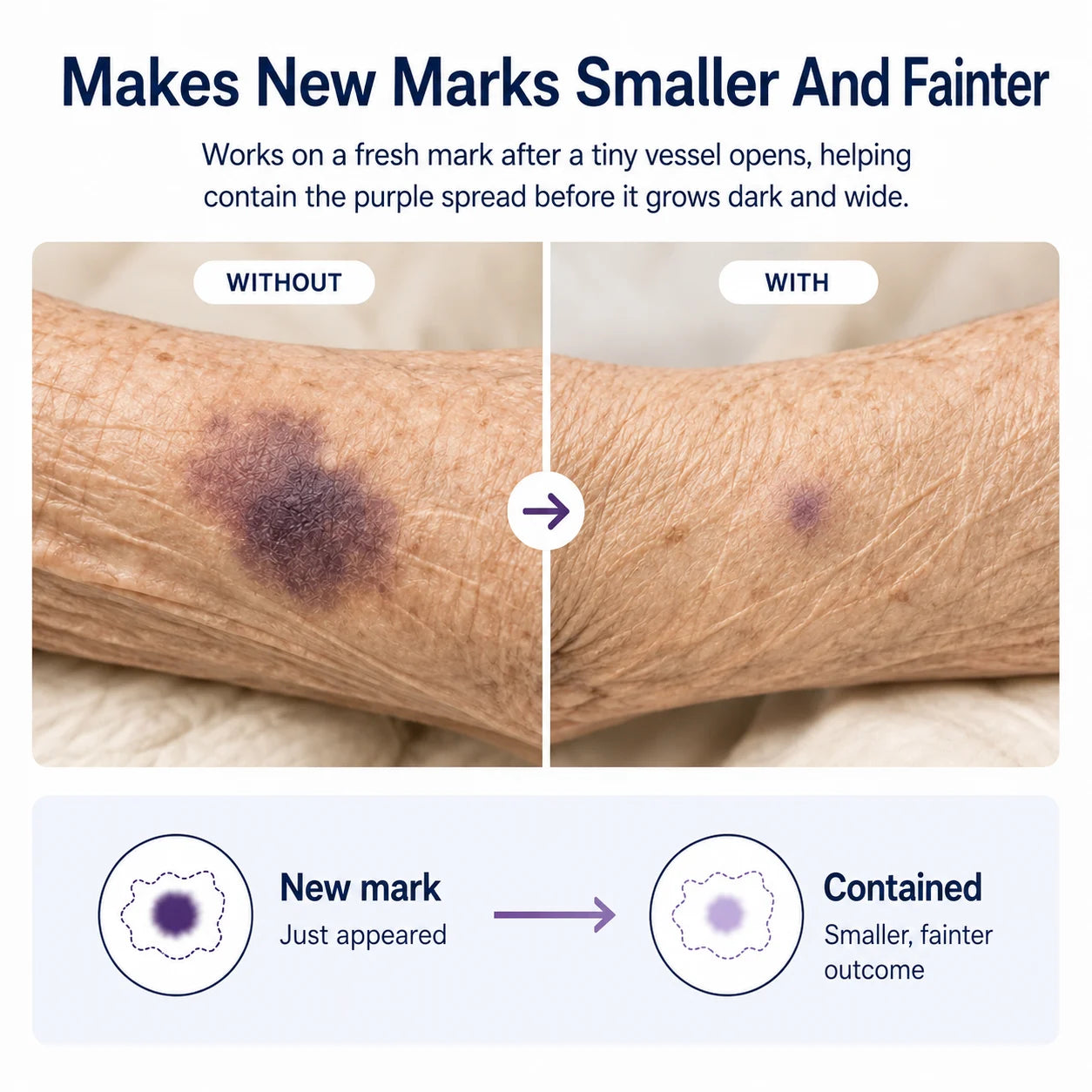
The vitamin your body uses to manage a bleed — the work that identified it won a Nobel Prize. A mark is a bleed under the skin. Put it straight on a fresh one and it pens the blood in: small and faint instead of dark and wide.
In the trial, vitamin K cream put on skin after it had marked reduced how severe the mark ended up.
Retinol + Glycolic Acid
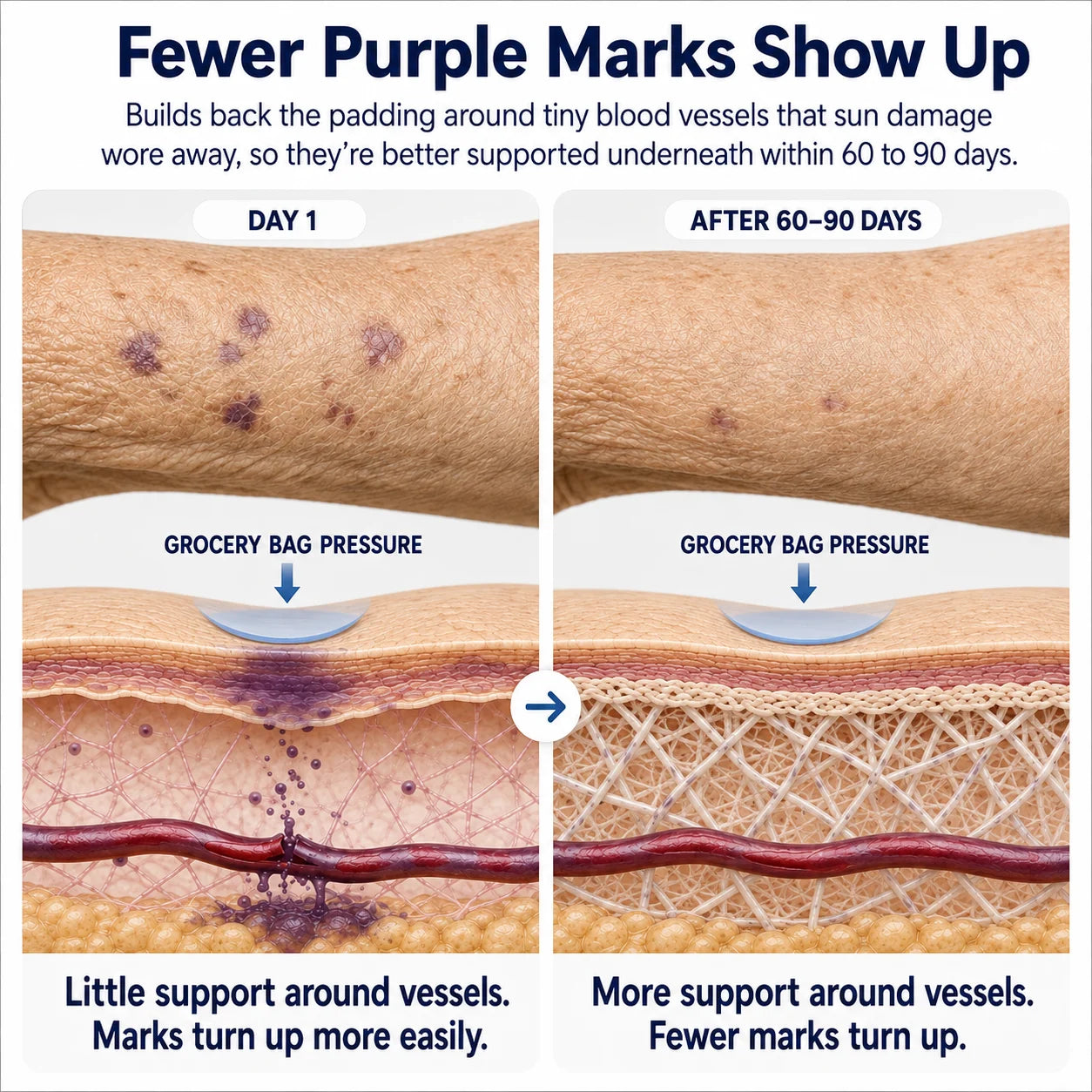
Everything else works on a mark that already happened. This pair works on why they happen.
Glycolic acid clears the way and lifts old discolored cells. Retinol reaches the collagen-making cells underneath and switches them back on. Over a full sixty days your body builds that cushion back — so fewer marks turn up at all.
Glycolic acid sits third on our ingredient list — a real concentration, not a token inclusion. That’s the strength this pair needs to reach the layer where collagen is made.
One arm of 36 nursing-home residents got a retinol lotion, the other a placebo, for twenty-four weeks. Skin samples from the treated arms showed more collagen being made.
Five Ceramides + Cholesterol + Fatty Acid
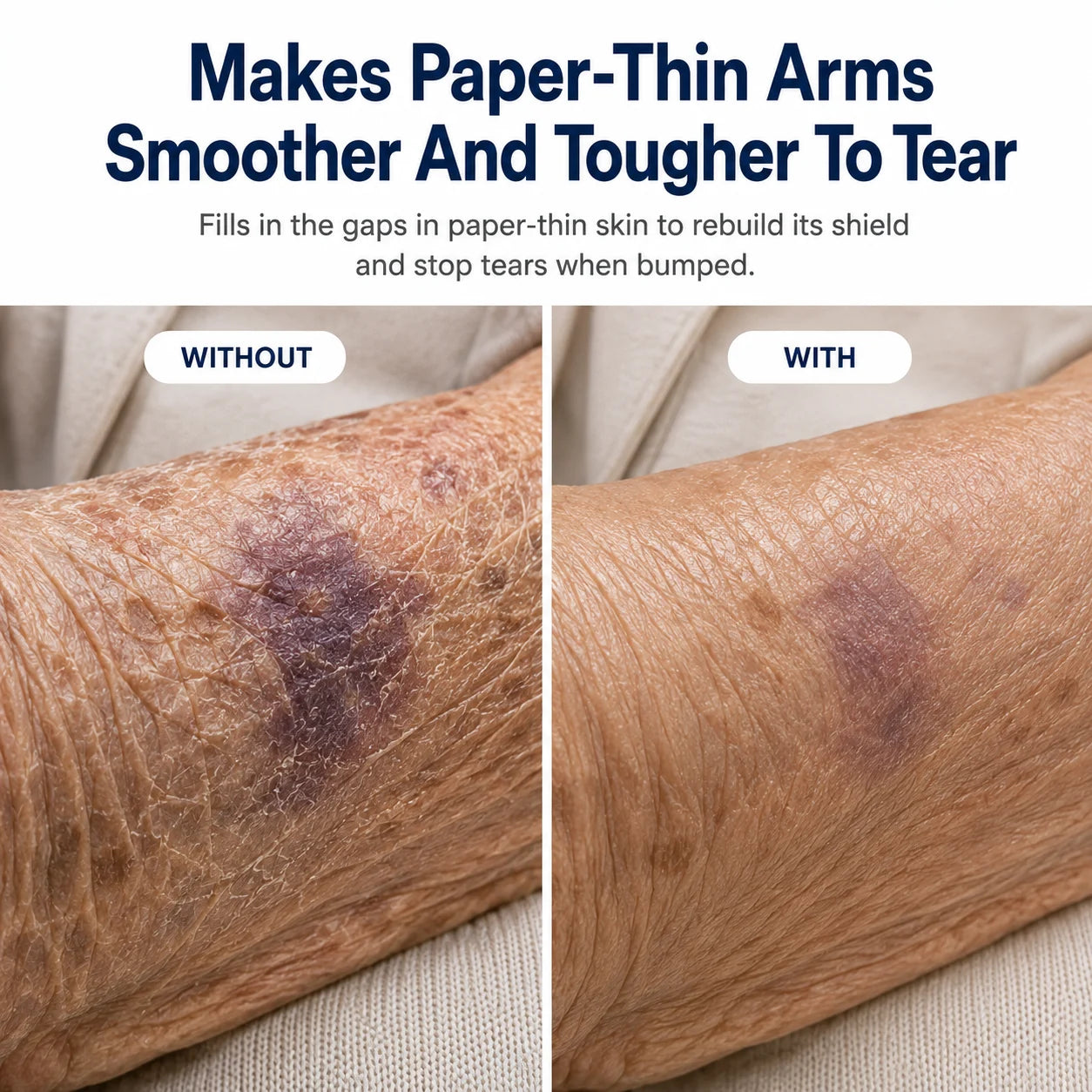
Your barrier is a brick wall and the mortar between the bricks has run out. That’s the tissue-paper feel, and why a sleeve catches instead of sliding.
Not “contains ceramides” — the full set: five ceramides, cholesterol and a fatty acid, the three things skin builds its barrier from. Plus niacinamide for the redness the sun left.
For six months, nearly a thousand older adults used a plain moisturizer on their arms and legs twice a day. Skin tears fell by nearly half. A plain moisturizer, not this formula — and nobody measured the marks, because a lotion has nothing in it that could touch them.
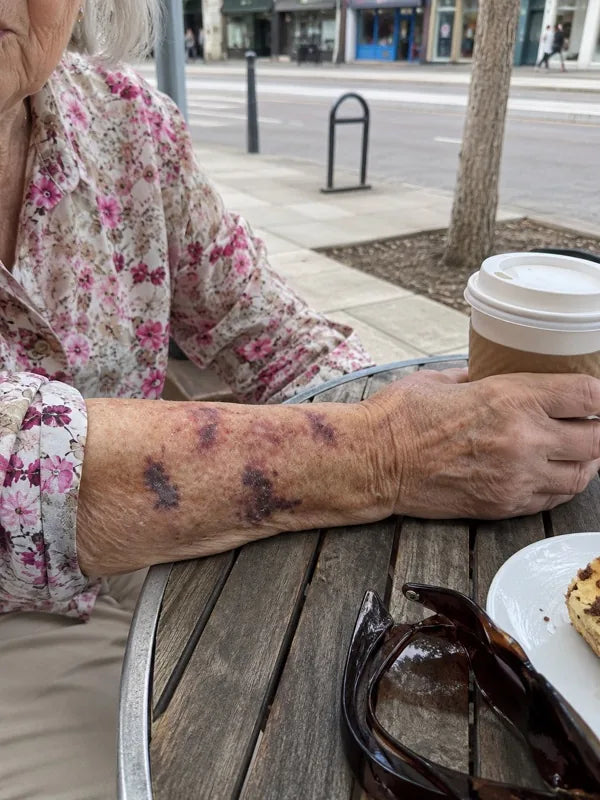
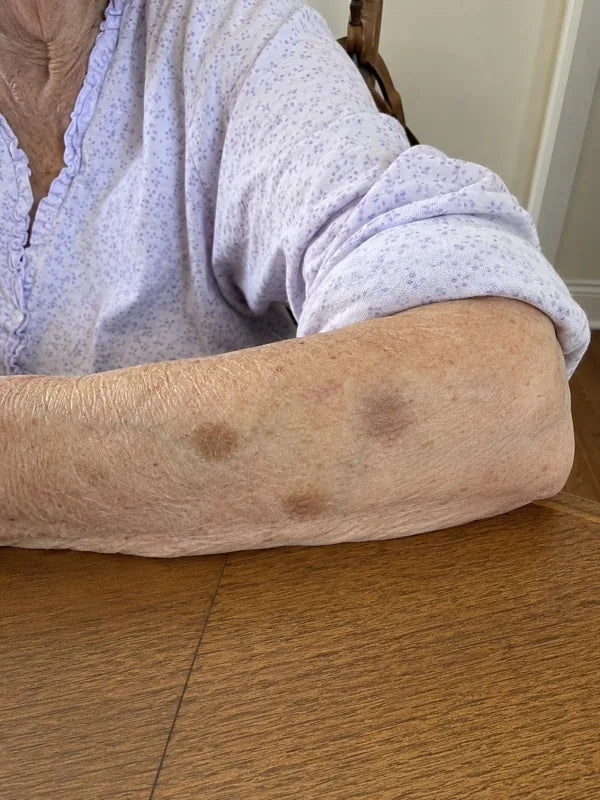
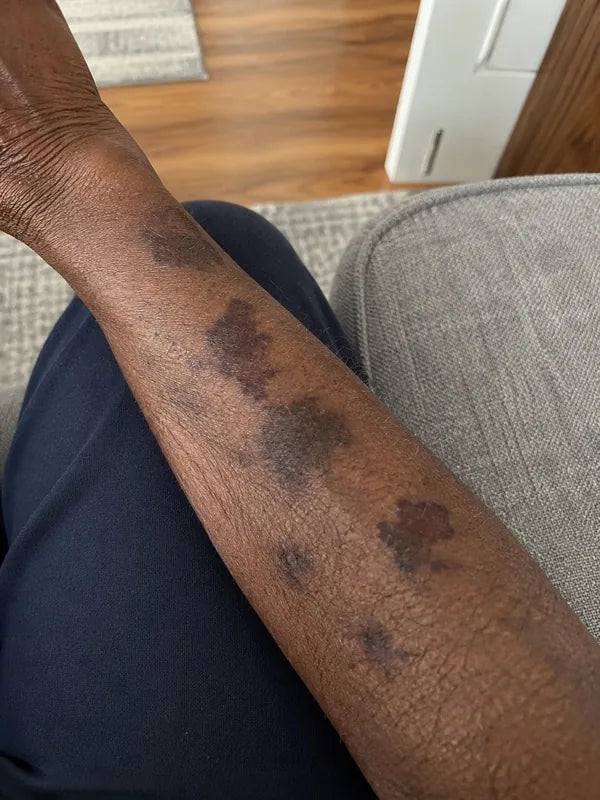
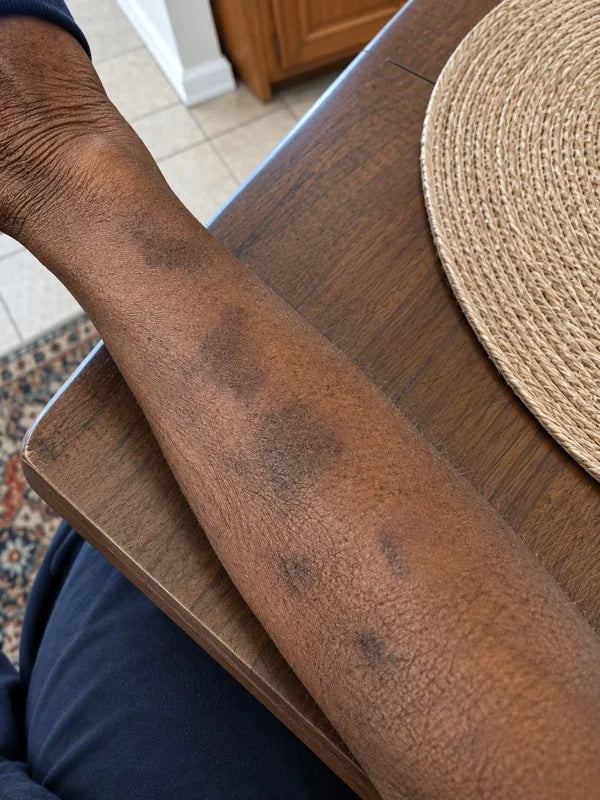
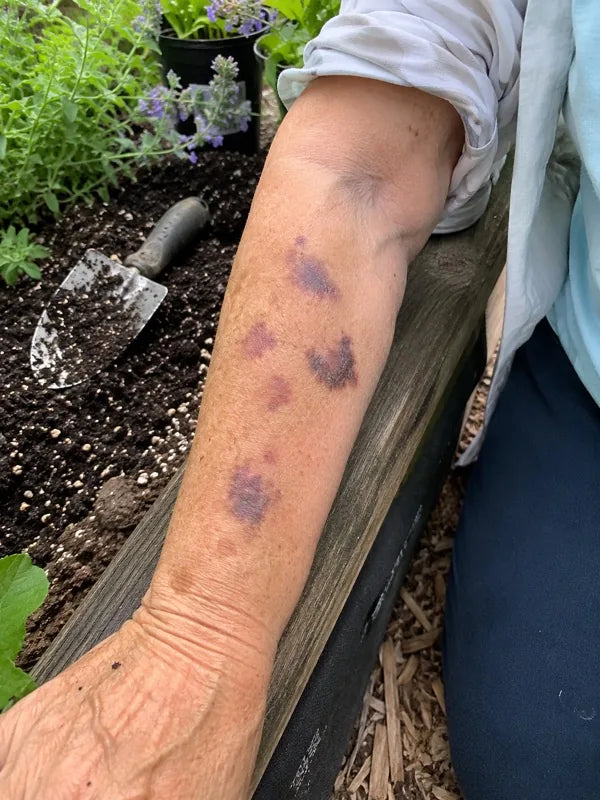
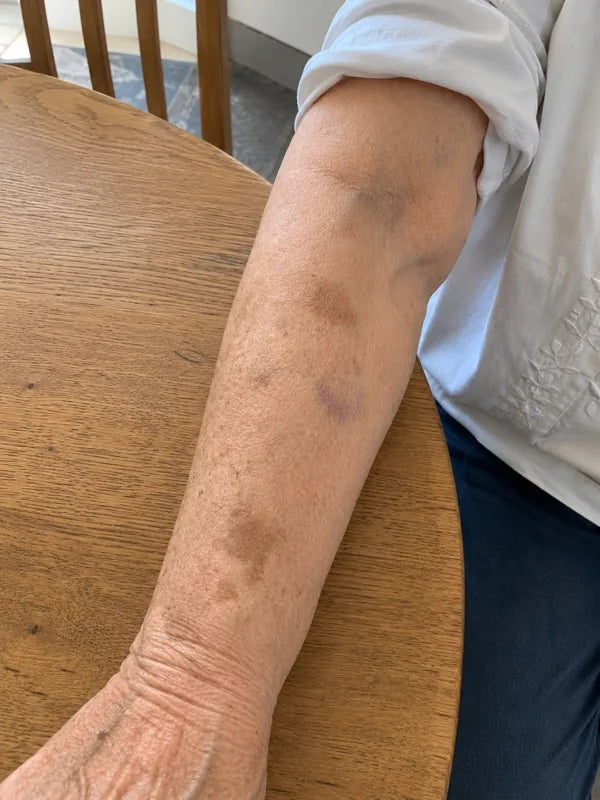
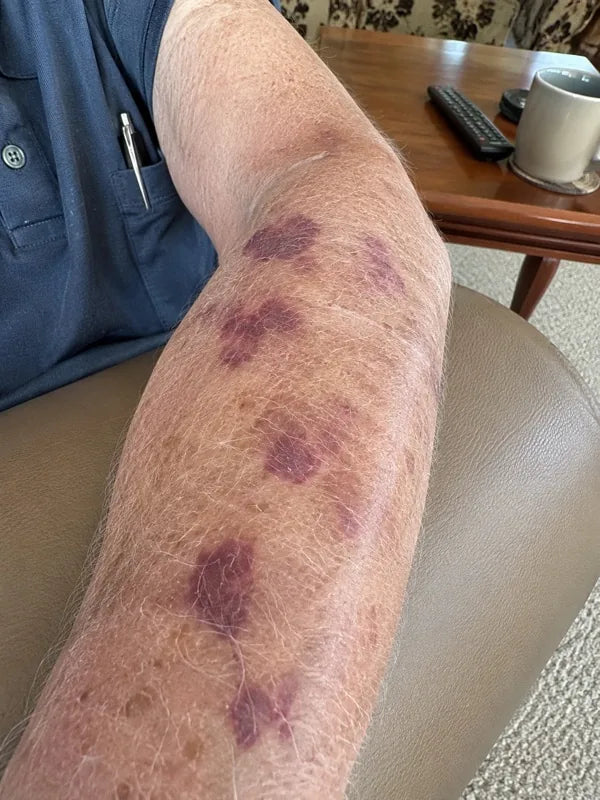
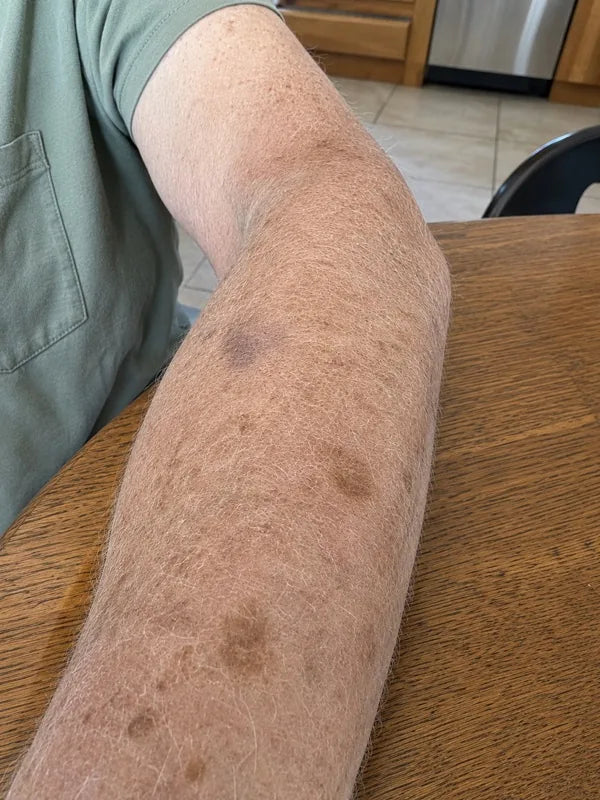
What the change actually looks like
The change isn’t one mark going. It’s fewer marks on the arm at once — because they leave faster, and by month two fewer turn up.
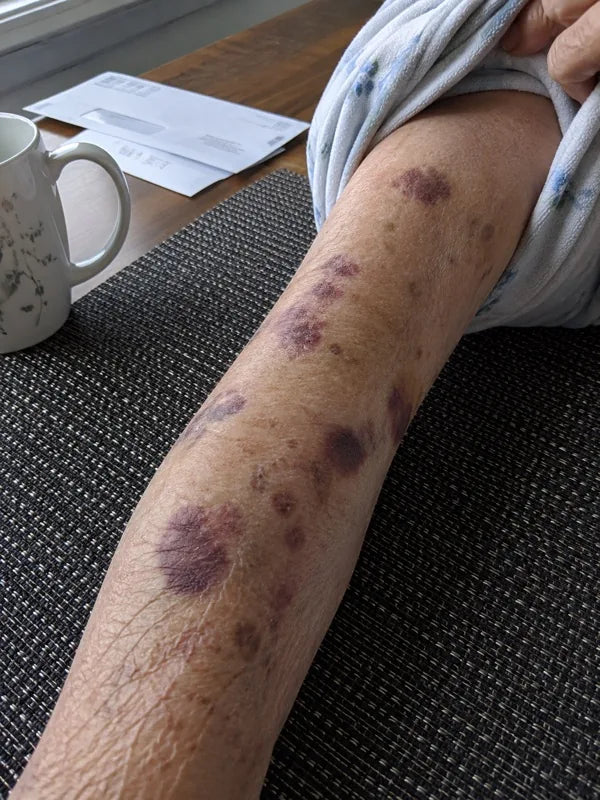
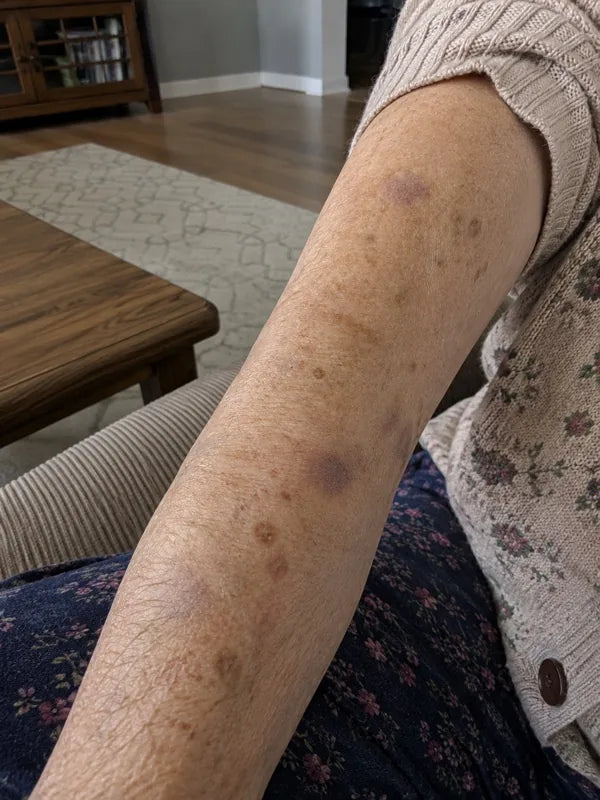
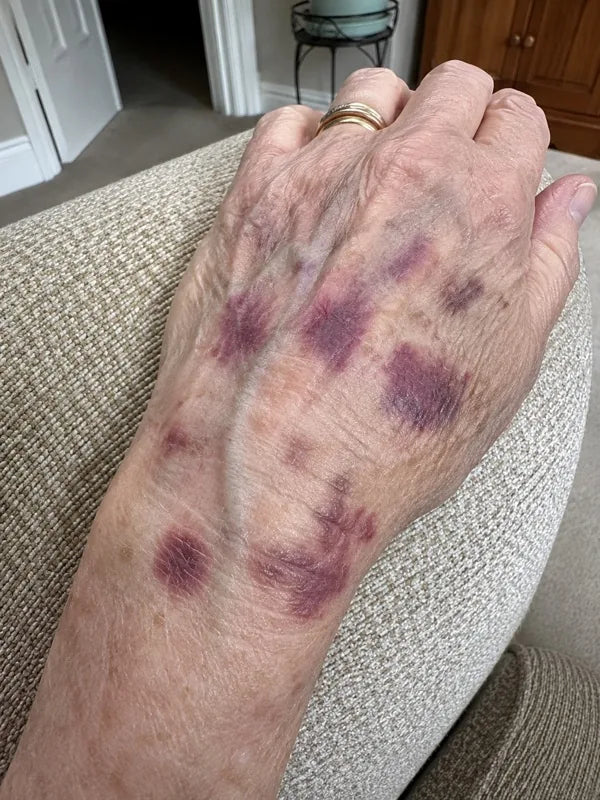
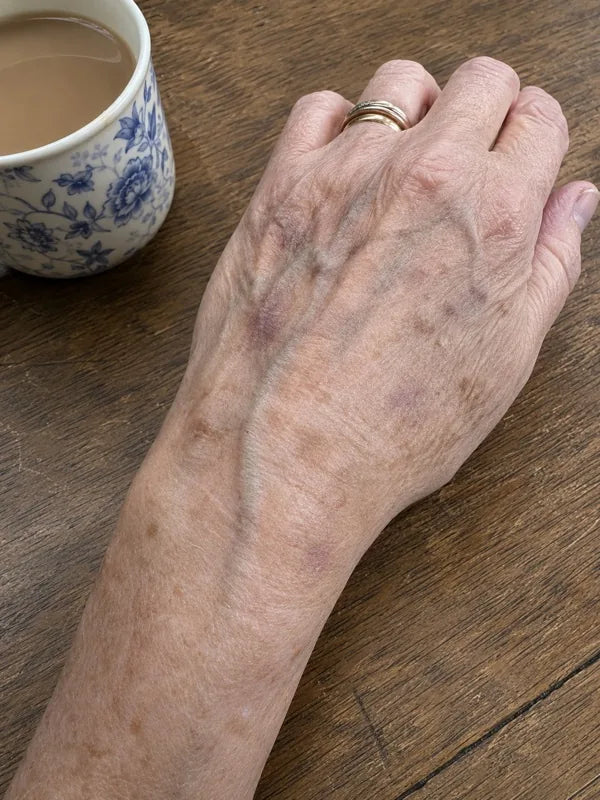
Why your arms are never clear
Four things went wrong with this skin. Two of them, between them, explain your arms — and nobody has ever put them together for you.

The bubble wrap around your blood vessels dissolved. The vessels didn’t.
Imagine a thin glass straw wrapped in bubble wrap. You can shove it in a drawer, drag it across a table, pull it out by the packaging — the bubble wrap takes all of that and the straw never breaks.
That bubble wrap is collagen, and it used to be packed around every tiny blood vessel in your arms. Decades of sun dissolved it. The straws are still there. The bubble wrap is gone.
So the same tug that used to get absorbed now goes straight into the glass. That’s why a sleeve does it. That’s why you don’t remember doing anything — because you didn’t. There is just nothing left protecting them.
And before you go back over every summer you ever spent outside: nobody knew. This is what sun does to skin over decades, it happened to a whole generation, and it was doing it long before anyone told you to cover up.

Your cleanup crew is running weeks behind. That’s the green and yellow you never see.
A mark is blood that leaked out of one of those vessels and spread sideways in a thin, flat sheet under the surface. To make it go, your body has to carry that blood away.
When a younger person bruises, the body sends a cleanup crew that swarms the spill and physically eats it. And the blue, then green, then yellow you watch on a young person’s bruise is that cleanup, happening where you can see it. Each color is a stage of the job.
In skin that has had sixty years of sun, that crew is running weeks behind. The signal that calls them is weak and the circulation that delivers them is poor. So the blood just sits there — and a mark takes up to three weeks to go.
Which is why yours never go green. They never go yellow. They go purple, and then they go brown. Because those colors are the cleanup, and yours is running so far behind that you never see it happen. You have been looking at that on your own arm for years, and nobody has ever told you what it was telling you.
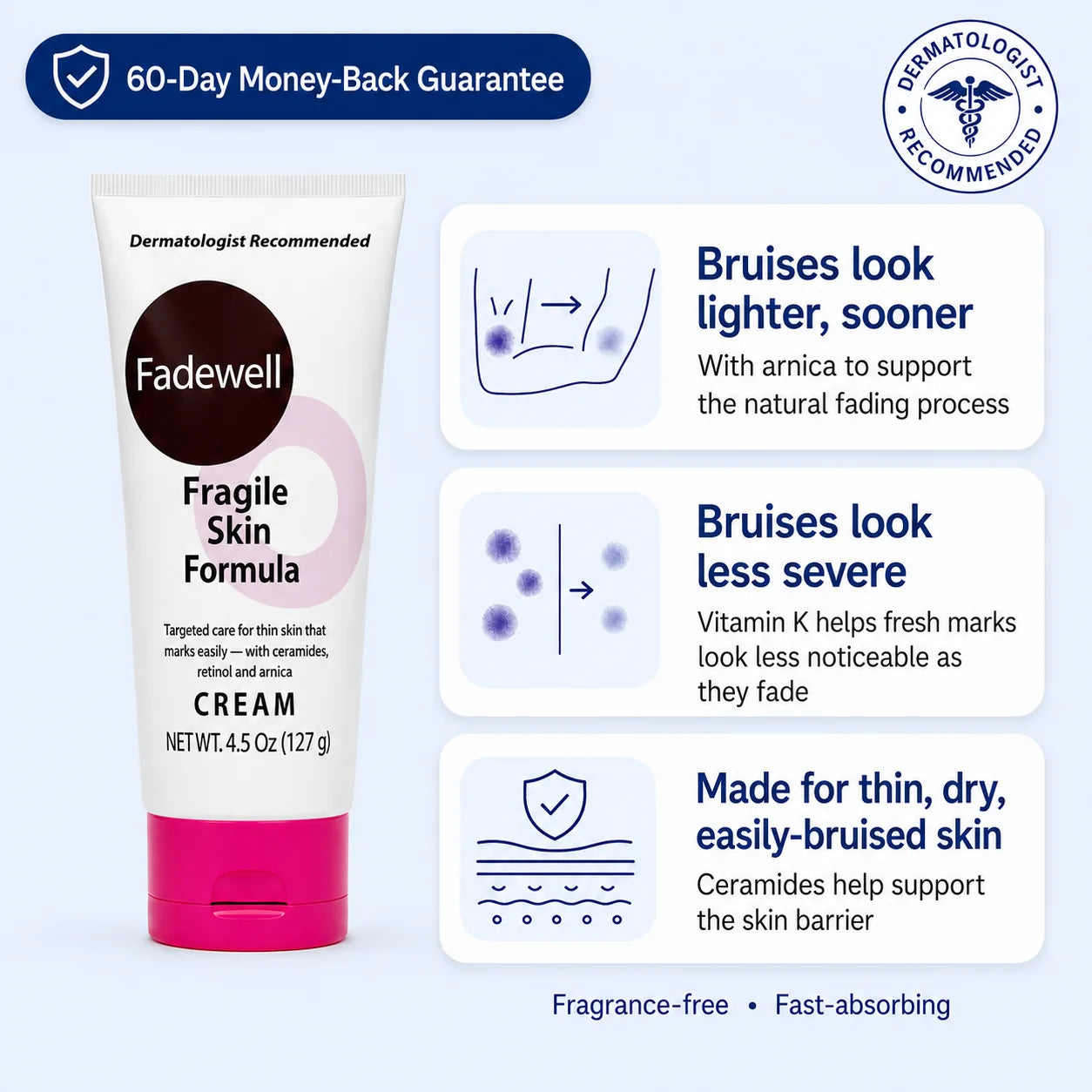
So it’s never one mark. It’s every mark from the last three weeks, at once.
How you’ll know, before the sixty days are up. Don’t watch the ones you have already got — those are mostly deposited iron by now, with little blood left to move. Watch the next one. When a new mark turns up, look at it that day, and look at it beside the one that arrived last week. Two things should be different: the new one comes in smaller and fainter, and it goes before the older one does — even though it arrived later.
That is the whole thing in miniature, on your own arm, inside two weeks. The sixty days are for the second half — the part you can’t watch happening.
The marks that are already there. Arnica montana works on blood that has already pooled so it clears sooner. Vitamin K goes onto a fresh one and pens the blood in, so it comes out small and faint instead of a big purple blotch. Each one leaves sooner — and because they are leaving faster than new ones arrive, fewer sit on your arm at the same time.
The surface they are happening to. Five ceramides, cholesterol and a fatty acid put the mortar back, so the skin stops feeling like paper and a sleeve slides over it instead of catching. Niacinamide calms the redness the sun left underneath.
And then the one that changes how many. Retinol and glycolic acid reach the layer where collagen is made and switch production back on. Over a full sixty days your body weaves fresh collagen back in around those bare vessels. The bubble wrap grows back — and fewer marks turn up in the first place. It is the reason this is something you do twice a day and keep doing, not something you dab on a mark.
Four things went wrong with this skin. One cream, working on all four.
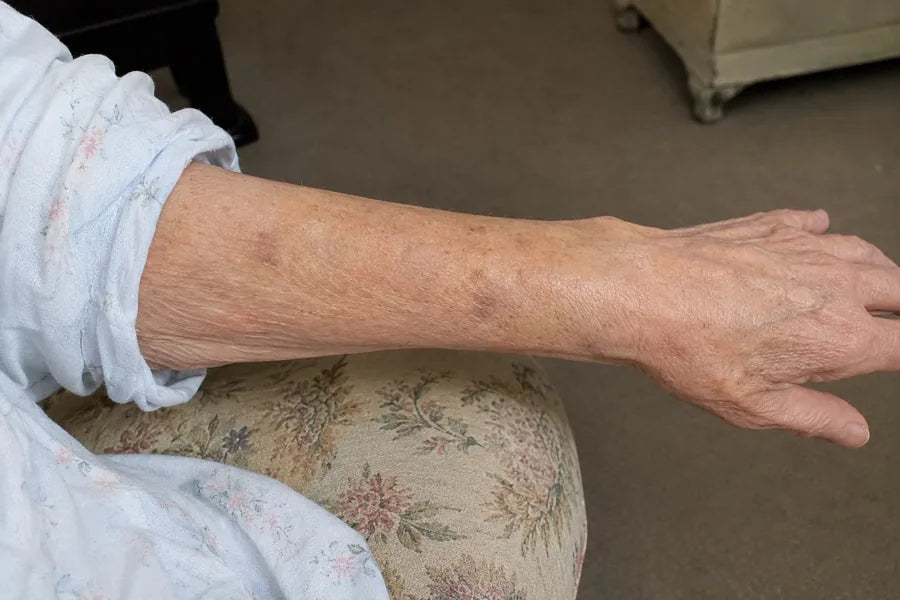
What changes, and when
Four things are being repaired, and they don’t finish at the same speed. Here’s the order it arrives in.
Try Fadewell Risk-Free → 60-day money-back guarantee- Tight, crinkly skin takes it straight in
- Surface lines soften while you rub it in
The Spongy Sponge Effect — it goes in before you finish rubbing.
- It stops feeling like paper
- Sleeves slide instead of dragging
- The tightness and itch settle
The Gliding Sleeve Effect — nothing drags on your arm now.
- New marks come in smaller and fainter
- And go in days, not three weeks
- Fewer on your arm at once
The Vanishing Purple Effect — there are fewer than there were.
- Older brown patches start to lighten
- More unmarked skin between them
The Fading Stain Effect — the old brown ones are fading too.
- The skin is thicker
- Fewer arriving in the first place
- Your whole arms — not one spot
The Short Sleeves Effect — short sleeves, without thinking about it first.
Fewer marks turning up takes a full sixty days — that is how long the skin needs to thicken.
Cover the whole arm — so the next mark is treated the day it turns up.
Most creams are made for one bruise: dab it on, wait. That was never your problem — you get a new one before the last one leaves. So this goes over the whole area, twice a day, mark or no mark.

Both forearms. Both hands.
Spread it over the full forearm and the backs of your hands. Not just the purple parts — so a new mark is already being treated the day it turns up.

Morning and night
Twice a day, am and pm — printed on the tube. Same rhythm as brushing your teeth. Work it in, then sleeves go straight over it.
Keep going after a mark clears
The marks are the fast part. Fewer marks turning up takes a full sixty days — that is how long the skin needs to thicken. Stopping at week four cuts the rebuild off right before it lands.
Both arms, both hands, twice a day — like brushing your teeth.
A bruise cream works on one problem. Your arms have four.
If there is a half-used tube of something in your bathroom drawer, here is what that tube was built for — and what it wasn’t.


The money in skincare is in the face — that’s where the actives and the research budget go. Nobody set out to ignore your forearms. They just aren’t where the industry makes its money.
Sixty days. If it isn’t worth it, you don’t pay for it.
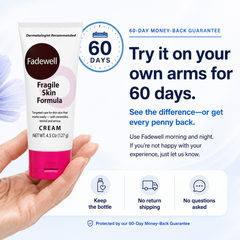
Use it twice a day for sixty days. That is long enough to watch it work: new marks come in smaller, go in days, and fewer sit on your arm at once. If you don’t think it was worth it, email us and we’ll refund every cent. No reason needed.
Sixty days is long enough to watch a dozen new marks behave differently. That’s enough to know.
Try Fadewell Risk-FreeFewer marks turning up takes a full sixty days. Give yourself enough to get there.
Every mark that sits out its three weeks leaves brown iron behind; caught early, it leaves less — that part is fast. The part that changes how many marks you get is your body laying collagen back down around the vessels. One tube runs out right before that lands.

Limited Time Offer
Buy 1
$34.99
Most Popular
Buy 2
$49.99
Buy 3
$69.99
By default, your selected package will continue to be shipped and billed automatically at the stated frequency unless you choose to skip, pause, cancel, or select the one-time purchase option below.
Refilled every 2 months
Skip, Pause, or Cancel Anytime
60-Day Money Back Guarantee
Love your results within 60 days or get 100% of your money back.
First Fewer At Once. Then Fewer Turning Up.
“Four at once in June. One in August”
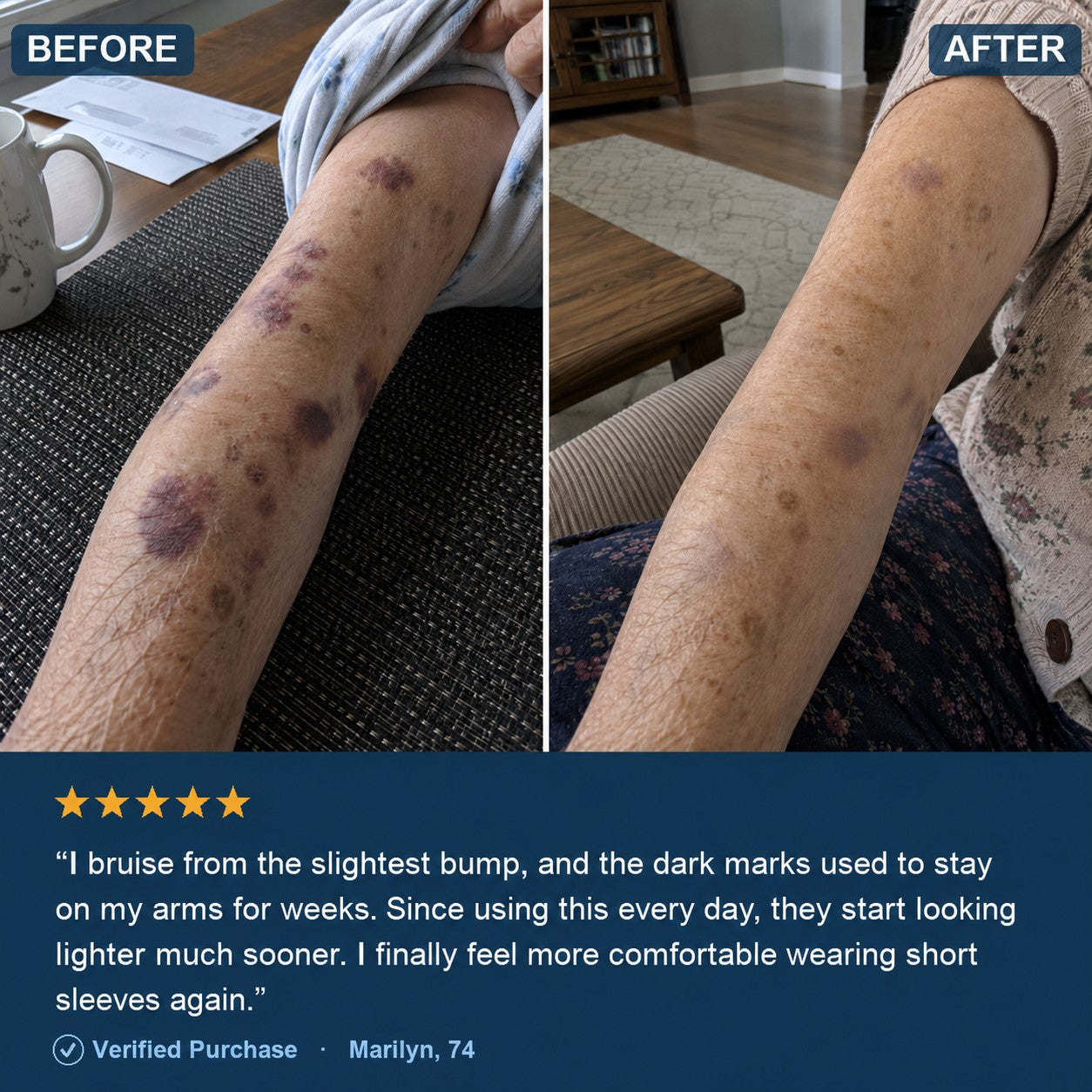
I had four going at once the day I started — I remember because it was the week of my niece’s wedding. Sixty days later there was one. I could not tell you it was working at any point along the way — no single one ever looked dramatic. But there were four in the first picture and one in the second, and I am not getting them as often now either.
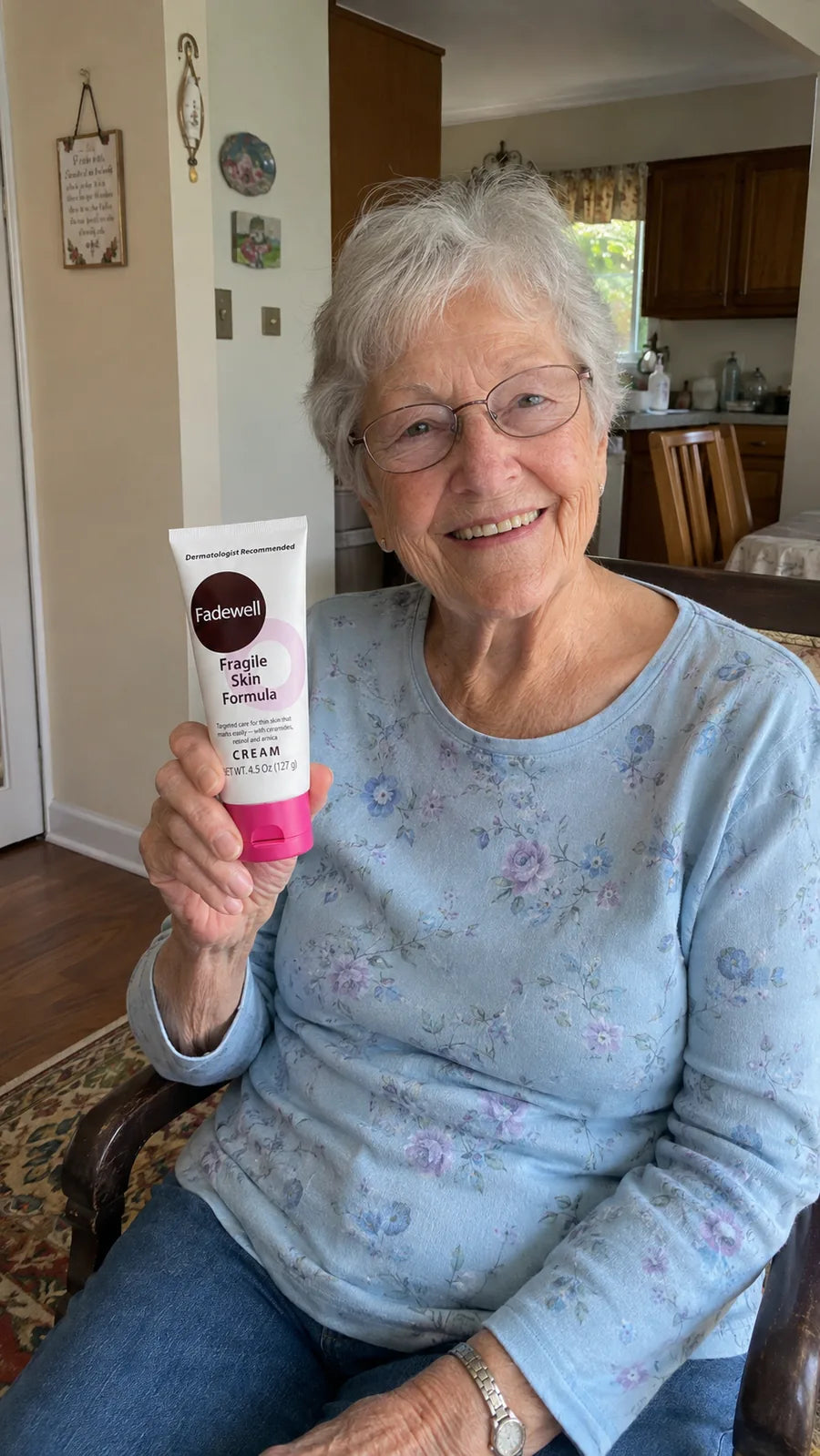
“Nobody had ever told me why mine don’t go green”
I have had these for six years and I have looked at them every single day, and it never once occurred to me that they were the wrong color. My husband gets a real bruise on his shin and it goes through the whole rainbow. Mine go purple and then that muddy brown and then they just sit. Reading why was the first time anyone had explained a single thing about my own arms to me. Two months in, there is noticeably less on my arms.
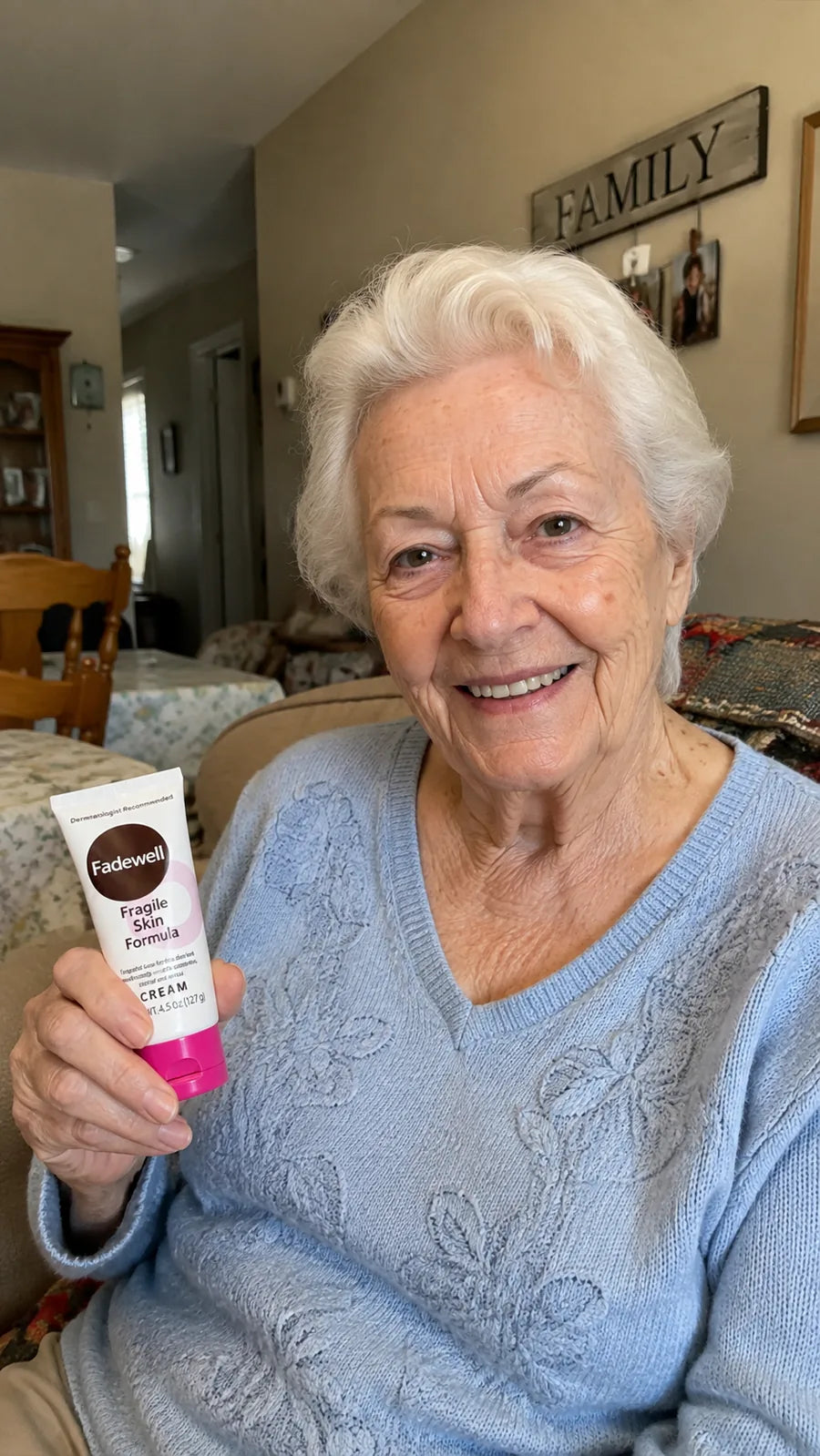
“Not a miracle. I want to be fair about that”
It works. It is not a miracle and I would not tell a friend it was. What I can say is that my arms are not the disaster they were in the spring, and I have not had that thing where four of them are going at once. Around the ten-week mark I also noticed I was simply getting fewer of them. Four stars because it took longer than I wanted it to.
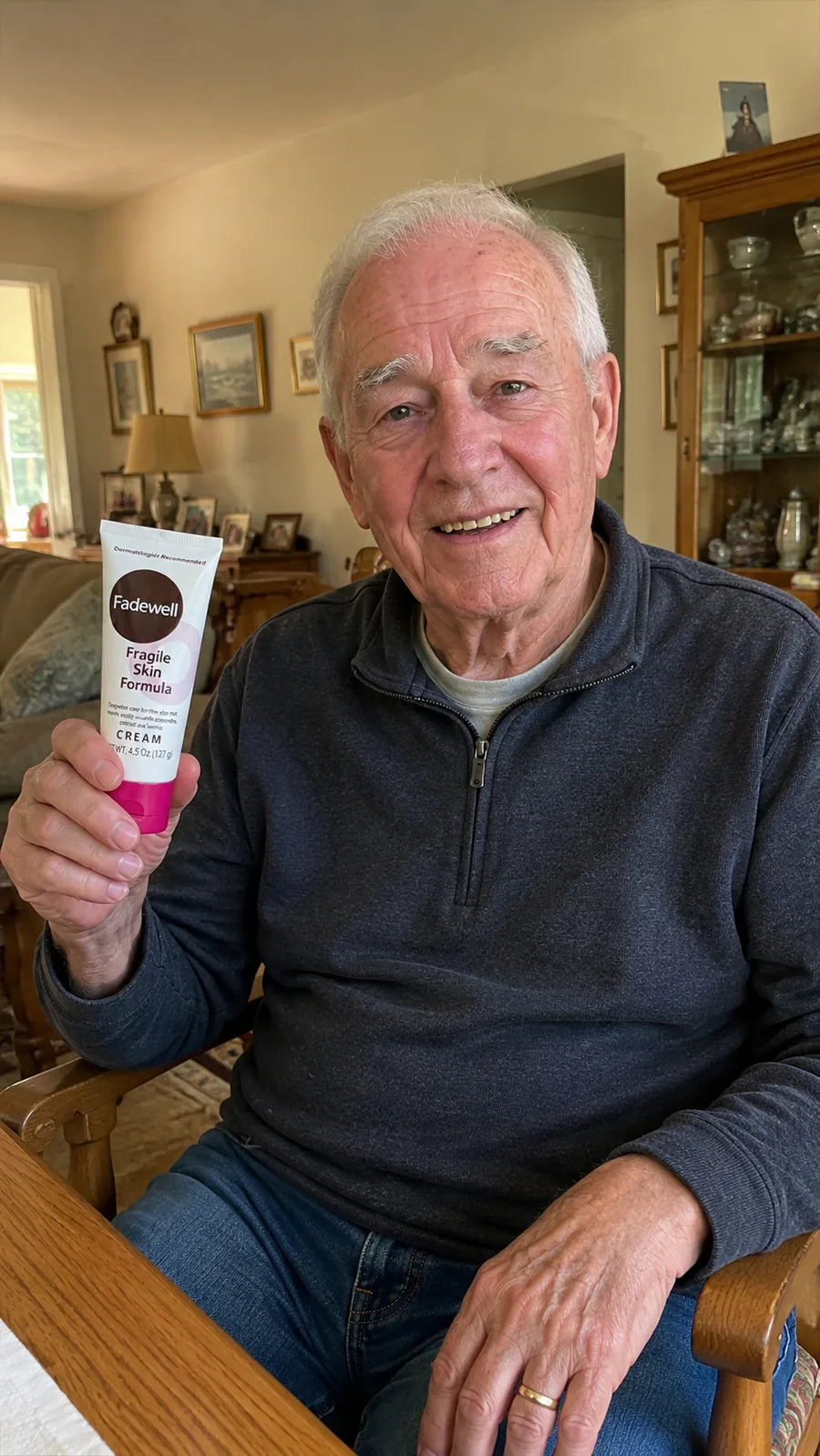
“I’d already tried arnica. Twice”
There is an arnica gel in my bathroom drawer that did nothing, so I nearly did not order this. What was different, and I did not understand it until I read their page, is that I had been putting it on one spot and waiting. You are supposed to do the whole arm and both hands, twice a day, whether there is a mark on it or not. That is the part nobody told me the first two times.
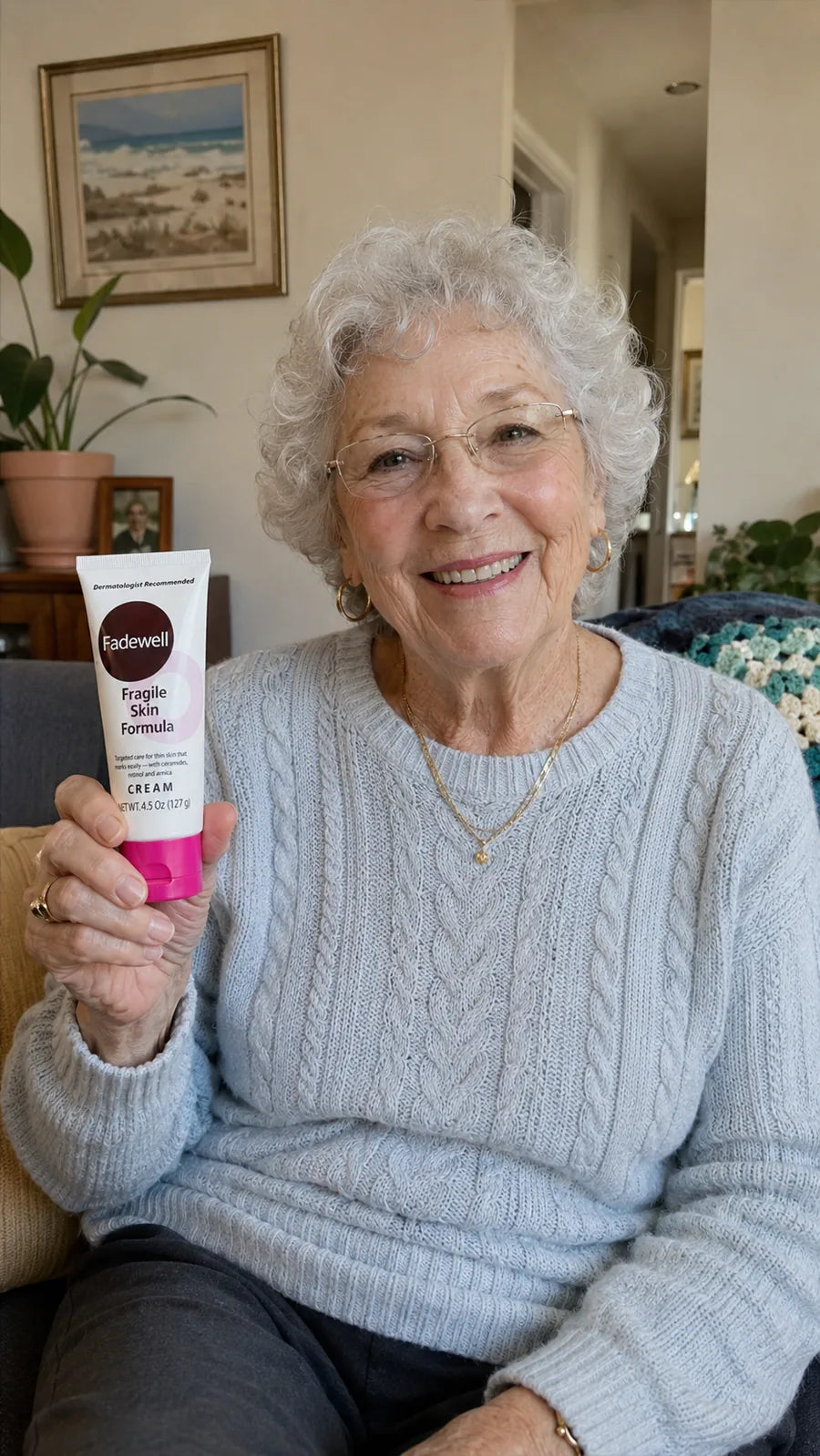
“The first minute is what made me keep going”
My arms have felt like tissue paper for years and I had stopped expecting that to change. The very first time I put this on, it went in and my skin actually smoothed out while I was still rubbing it. That is a small thing and it is the reason I used it every day, and using it every day is what made the difference.
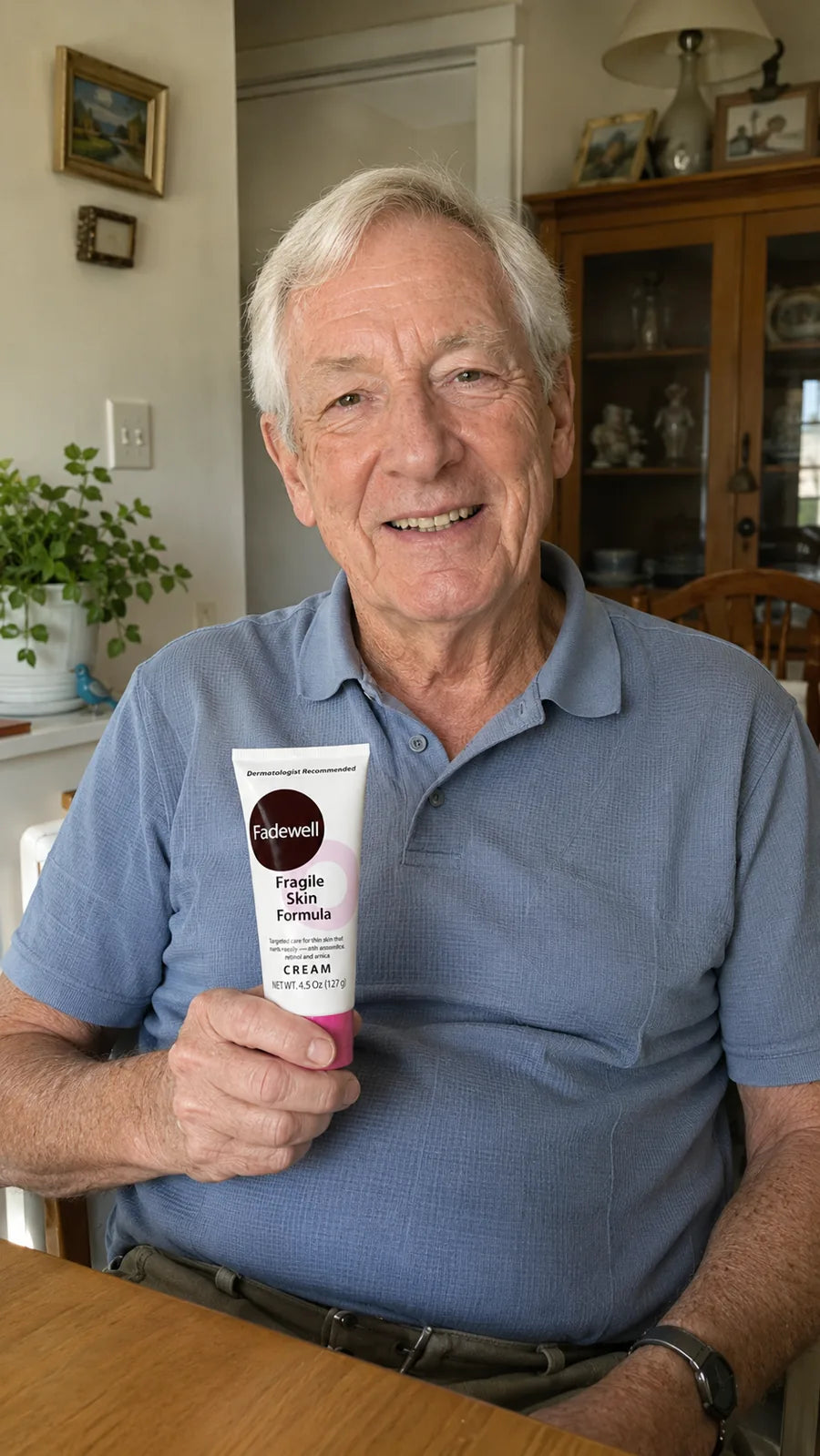
“Short sleeves at my granddaughter’s party”
I have kept my arms covered for four years. You get tired of the looks, and of people asking, and of having to say out loud that nobody is hurting you. In August I wore short sleeves to my granddaughter’s birthday. There were still two faint brown ones near my wrist. Nobody asked me a single thing about it.
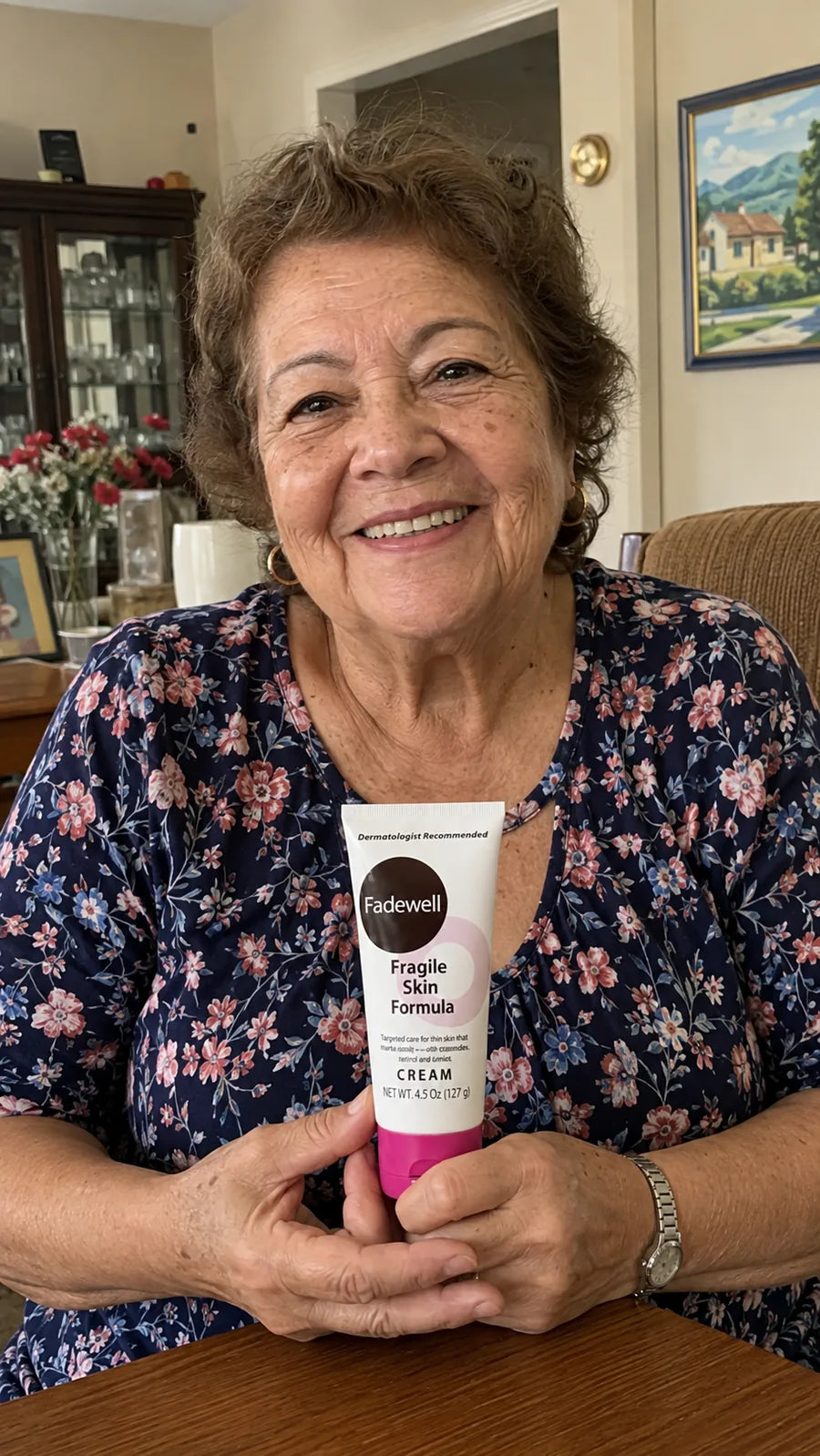
“I was nervous about the retinol, I’ll be honest”
My skin is thin enough that a Band-Aid takes a layer off, so the word retinol almost stopped me from ordering. Ten weeks in it has not stung once, not one day. Four stars only because I went through my first tube quicker than I expected — get the three.
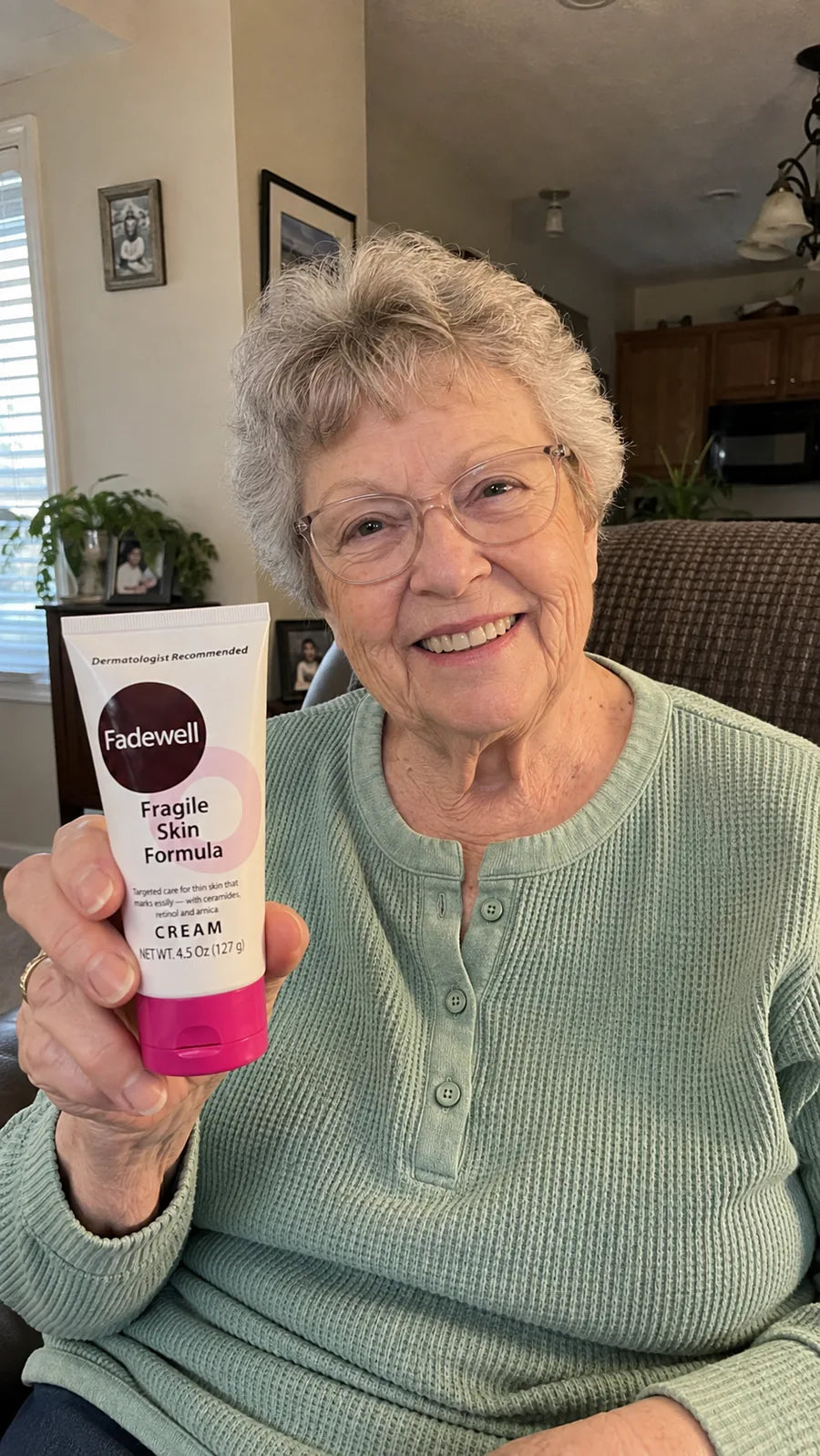
“No smell, which sounds small and is not”
The last one I bought smelled like a hospital hallway. My husband asked what I had put on. That bottle is still under the sink, which tells you how often I reached for it. This one has no smell at all, and that is the entire reason I have actually used it every day.
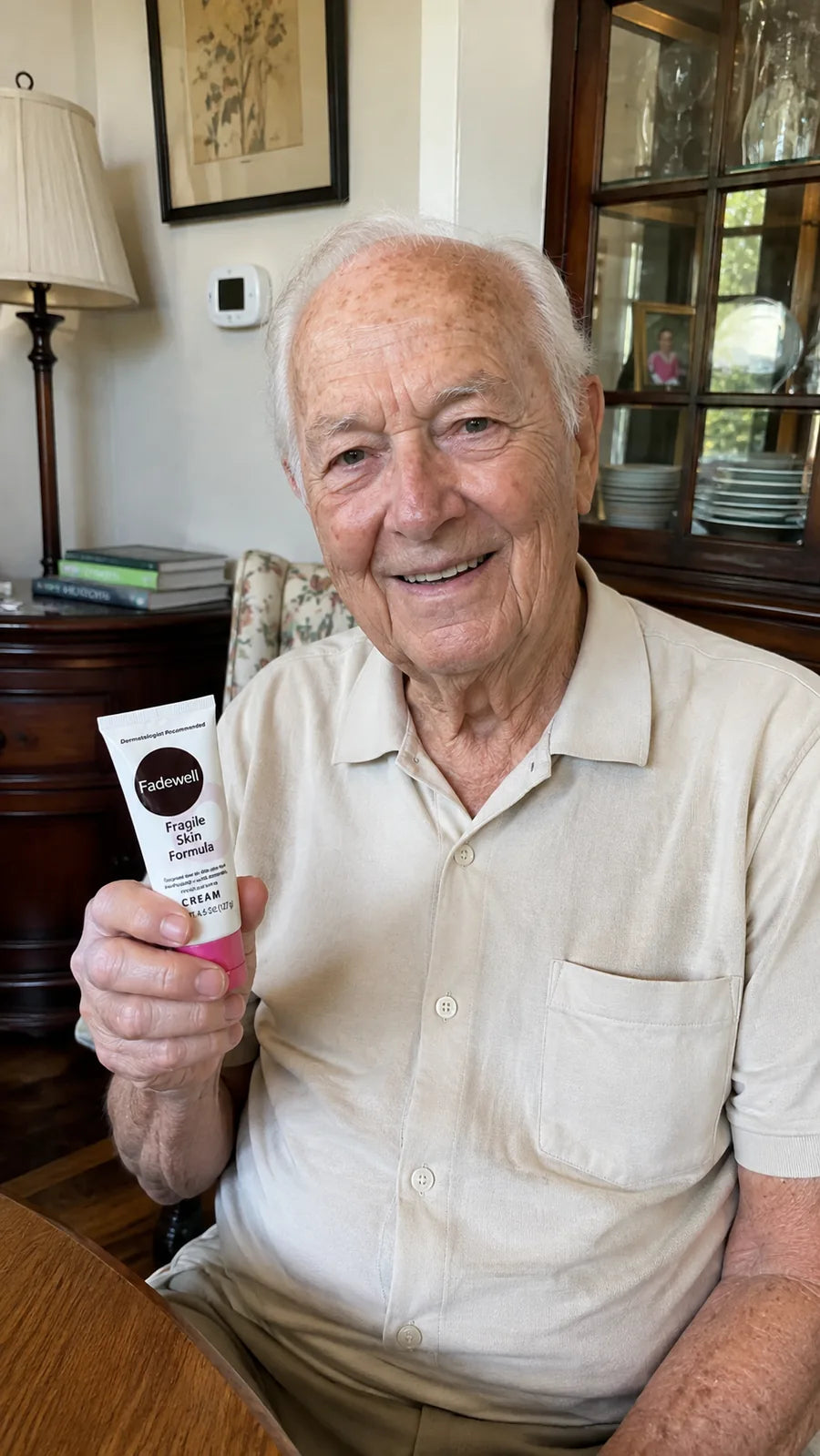
“I am on a blood thinner, so read this part”
I have been on a thinner since my second clot and I mark if the dog leans on me. I mentioned it to my doctor before I started, because you should with anything new, and she had no issue with a cream on the skin. I still mark more easily than most people and I always will — that is the thinner. What changed is how many are sitting there at once. Two instead of six, and they go quicker.
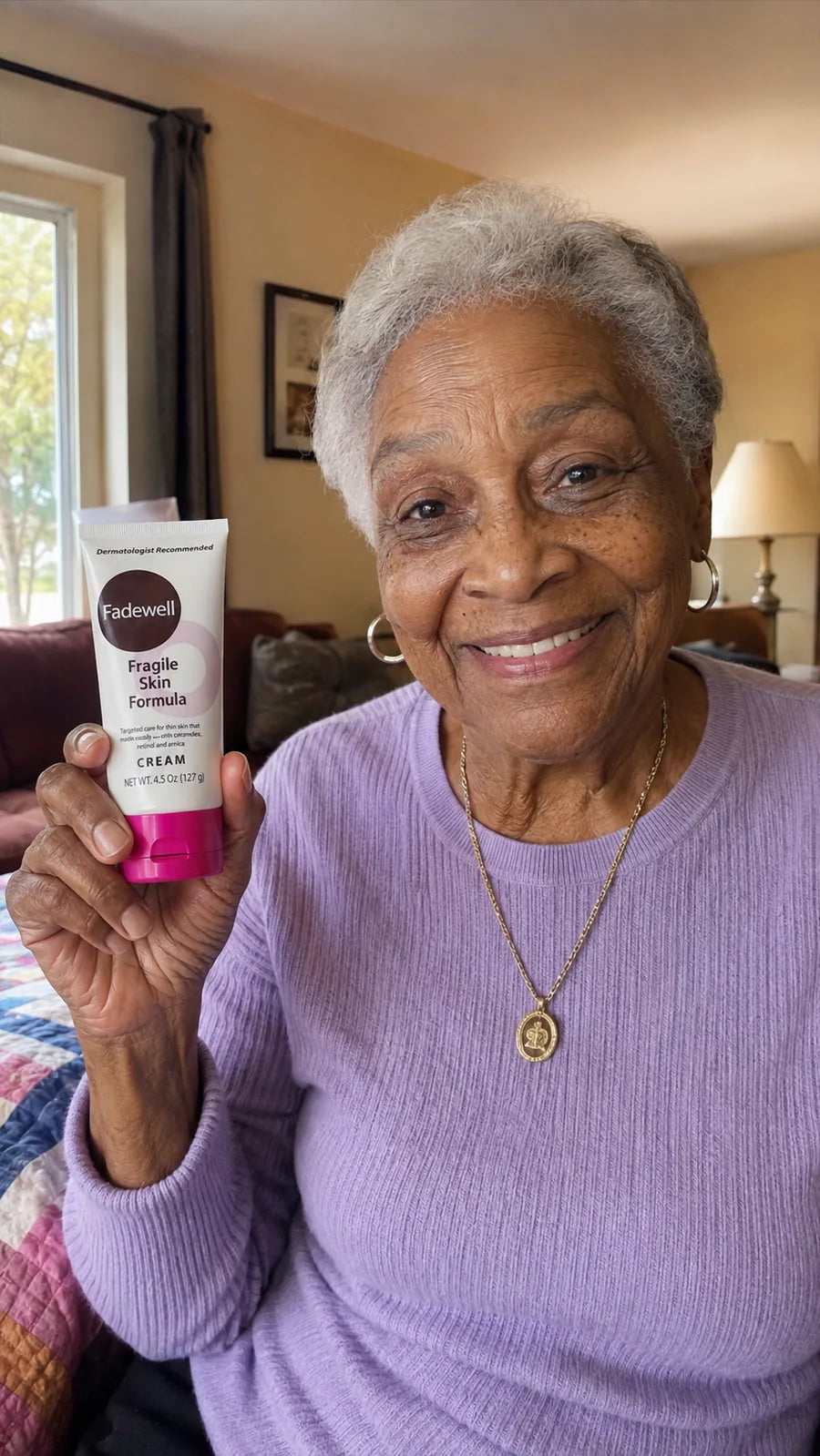
“Week five nearly finished me”
I want to say this because I nearly wasted the whole thing. Around week five I decided it was not doing anything and I stopped for four days. Then I really looked, and there was plainly less on my arm than there had been. The second tube is where it really moved — that is when I stopped getting a new one every few days. Do not quit at week five.
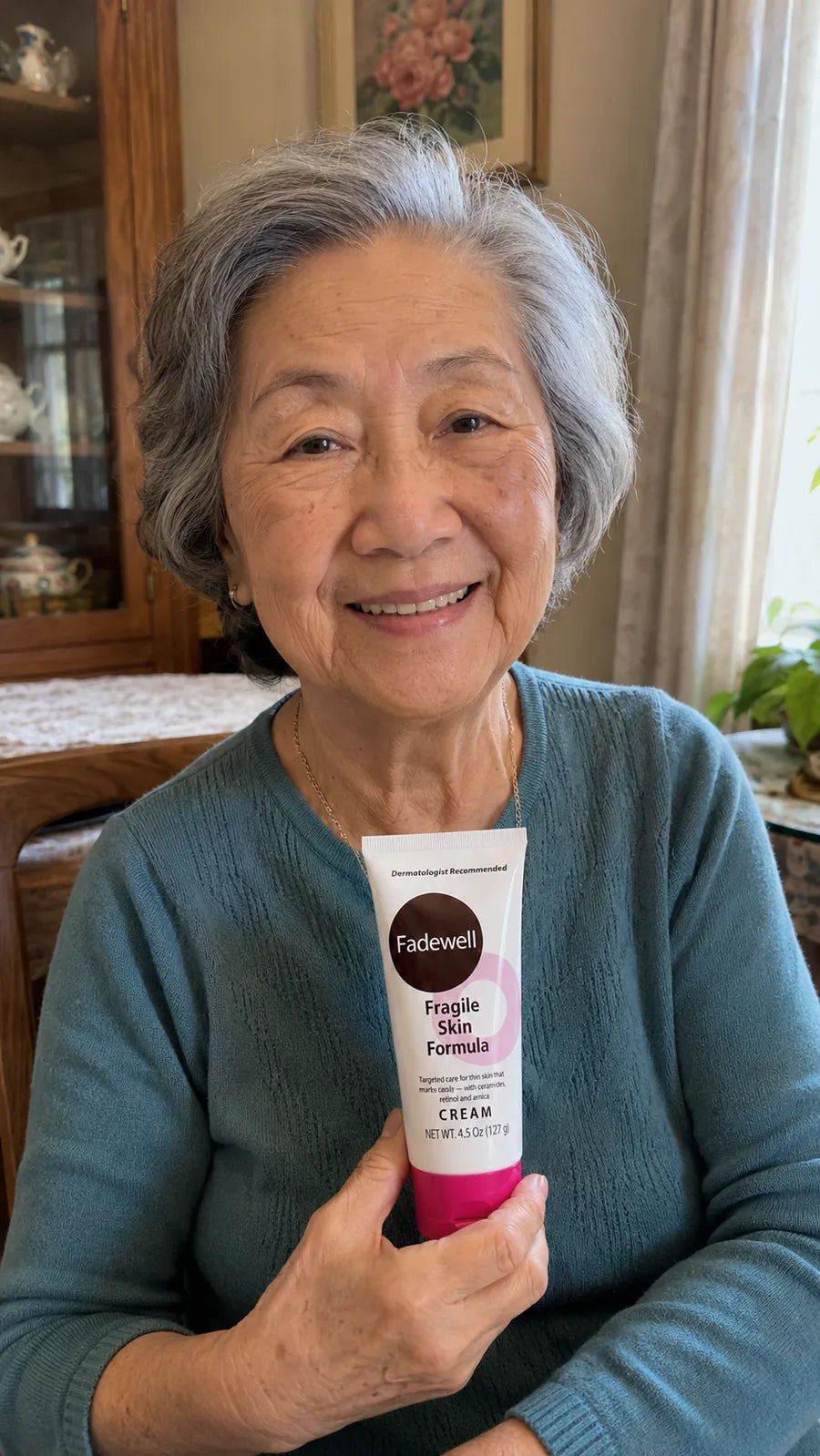
“It did less for the old brown ones than I hoped”
Three stars and I’ll say why. The new ones do behave differently — they come up smaller and they are gone in days now, that part is real and I was not expecting it. But I have two old brown patches near my wrist that I have had for over a year, and after ten weeks they are lighter and they are still there. If you are buying this to get rid of something that has been sitting on you for a year, temper that. If you are buying it because you are sick of four at a time, that part it did.
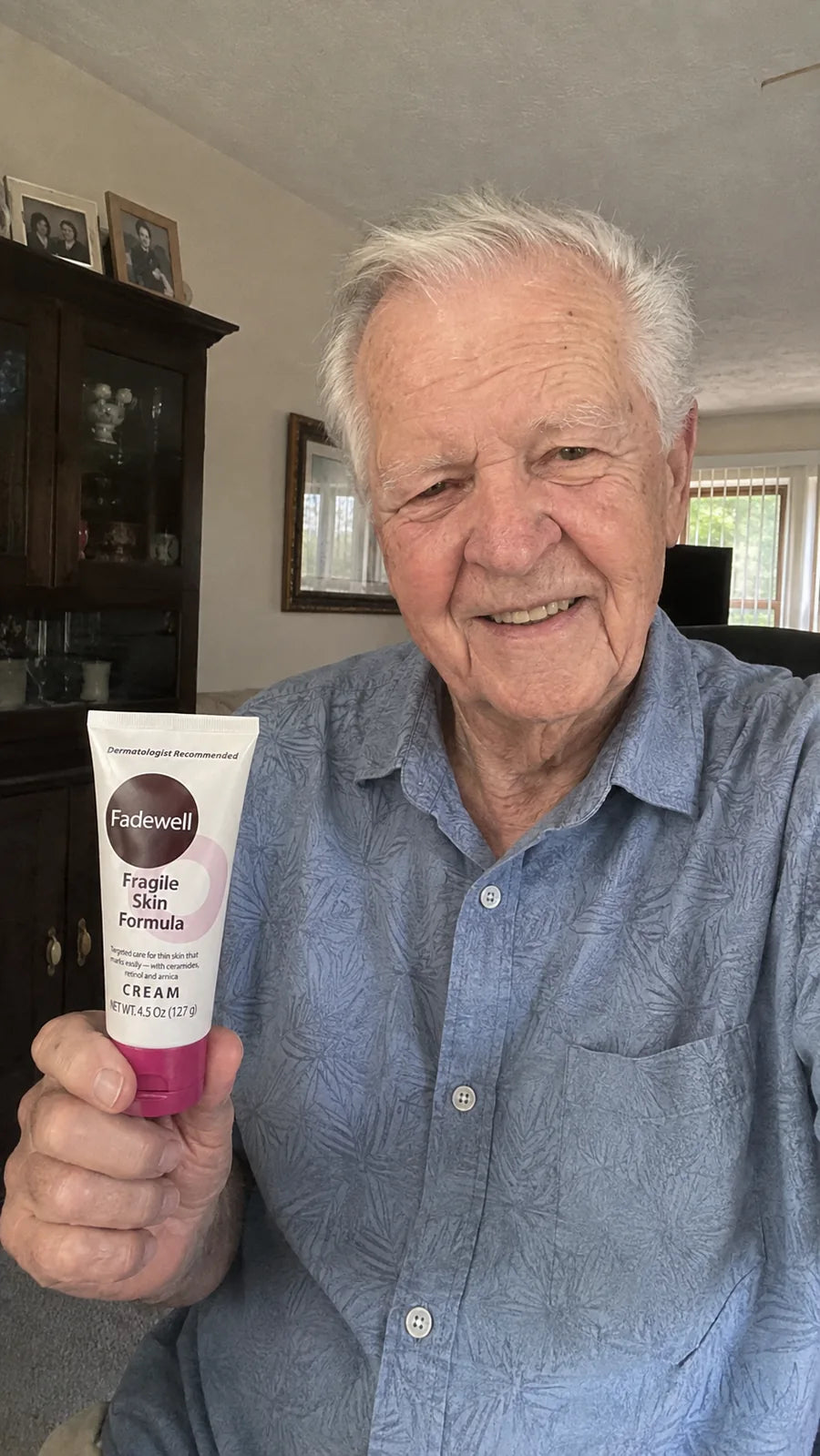
“Fewer at once. That’s all I wanted”
Fewer at once. That is the whole change and it is enough.
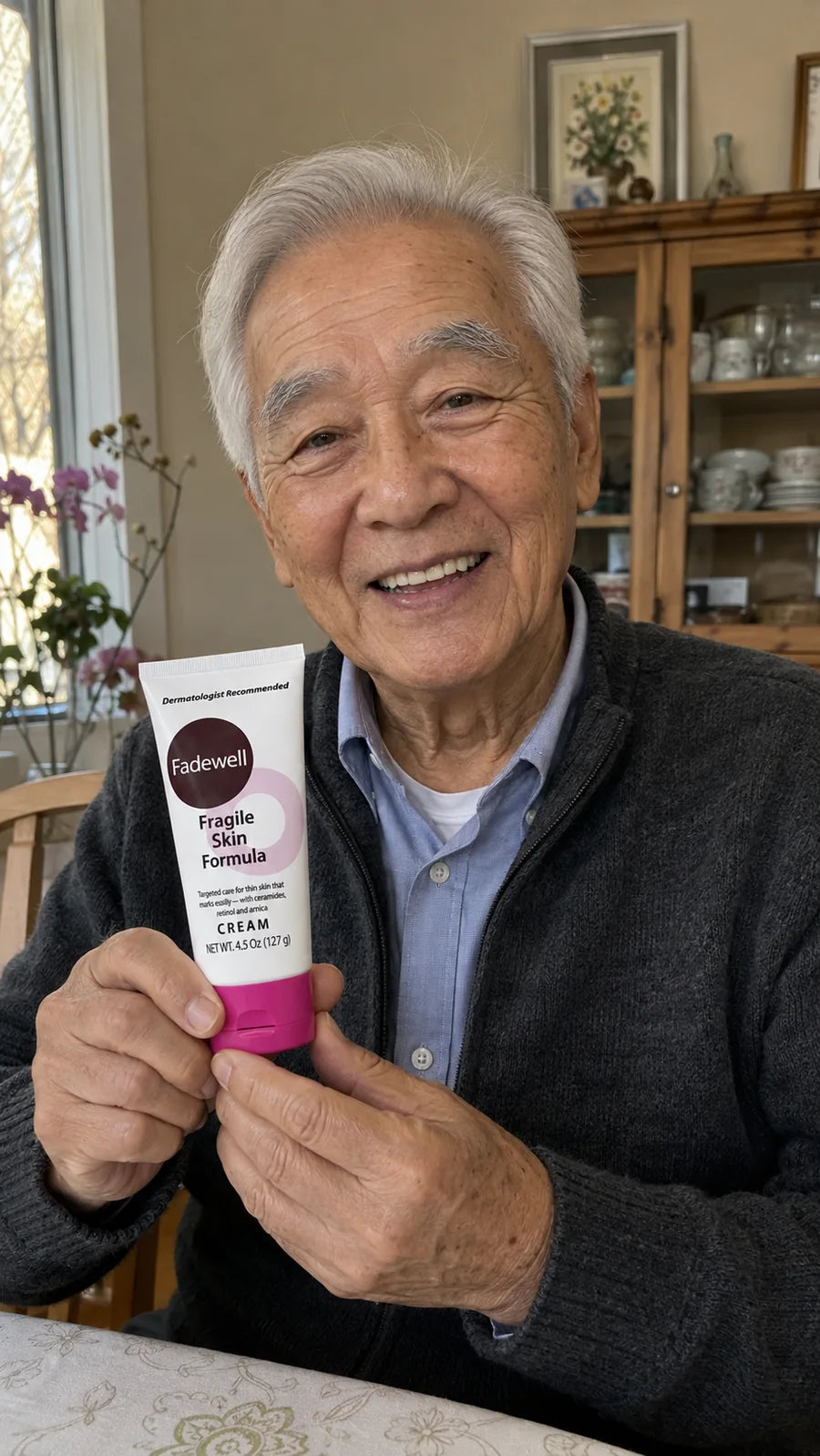
The questions everyone asks first.
So change what you measure. Don’t watch one mark — look at the whole arm. How many are on it at once, and how big the new ones come in. Those you can see without remembering what hit you.
First, what it works on. An arnica cream works on the mark that has already happened — and that is one of four things that went wrong here. It has nothing in it that reaches the layer where the marks start. That’s retinol and glycolic acid, and they’re both in this.
Second, which arnica. Real Arnica montana is a protected mountain flower that took a decade of state agricultural trials before anyone could farm it, and it is expensive. There is a cousin that grows in flat low fields, costs very little, and can still say “Arnica” on the front of the box — it carries only a fraction of the compound that does the work. The question was never how much arnica. It was which plant. It says Arnica montana on our ingredient list — you can read it there yourself.
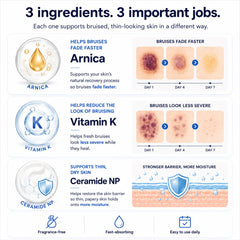
True Arnica montana — works the blood already pooled in a mark so it clears sooner.
Vitamin K — goes onto a fresh mark and pens the blood in, so it comes out small and faint.
Retinol + glycolic acid — reach the layer underneath and build that cushion back over a full sixty days, so fewer marks start. This is the pair that changes how many marks you get.
Five ceramides + cholesterol + a fatty acid — the three things skin builds its barrier from, for the dry, papery surface.
Niacinamide + water-binders — calms the redness the sun left, and pulls water into papery skin on contact.
Glycolic acid sits third on the ingredient list. That’s a real acid concentration, not a token inclusion.
It does contain retinol, and on its own retinol can be hard on thin skin. That is exactly why it isn’t on its own here — it’s paired with the full set of five ceramides, rebuilding the surface while the retinol works underneath it.
One thing worth knowing about the first week: a mark that has been on your arm two weeks is mostly deposited iron — there is very little blood left to move. A mark caught on its first day still has blood to clear. That’s why the fresh ones go so much faster than the old ones, and why the whole arm gets covered twice a day rather than dabbed when you spot something.
Cover the whole forearm and the backs of both hands, twice a day, and the moment a new one turns up it is already being worked on. So is every other one on there. A cream dabbed on one spot treats one spot, days after the moment that mattered.
It is also the only way the arnica and the vitamin K ever reach a mark on its first day, which is the day they do the most.
What a moisturizer can’t do is calm the redness underneath, build back the cushion that held your vessels steady, or touch the bleed — penning a fresh mark in, moving trapped blood before it turns brown. That’s the other three, and it’s what the niacinamide, the retinol and glycolic acid, the vitamin K and the arnica are for.
A protected mountain flower that took a decade of state agricultural trials before anyone could farm it. A real acid concentration sitting third on the list. Retinol. And the full set of five ceramides — five ceramides, cholesterol and a fatty acid — rather than “contains ceramides.”
A body cream is usually cheap because the money in skincare is in the face. That is where the actives and the research budget go. Nobody set out to ignore your forearms — they just aren’t where the industry makes its money.
This is a cream that goes on your skin, not something you swallow. Almost none of it gets through into your blood — a cosmetic-level amount, not an oral dose — and it is not expected to affect what your medication does.
You’ll still mark more easily than most people — that’s the medicine doing its job. What changes is how many marks sit there at once, and how fast they go. This works on your skin.
The first tube is where you see the new marks start behaving differently. But getting fewer marks in the first place runs a full sixty days — that is how long your body takes to lay that collagen back down. One tube doesn’t get you there. It runs out right before the part that changes how many marks you get.
If sixty days in you don’t think it was worth it, email us and we’ll refund you in full.
Two steps: email us, get your money back.