Care for the appearance of purple marks
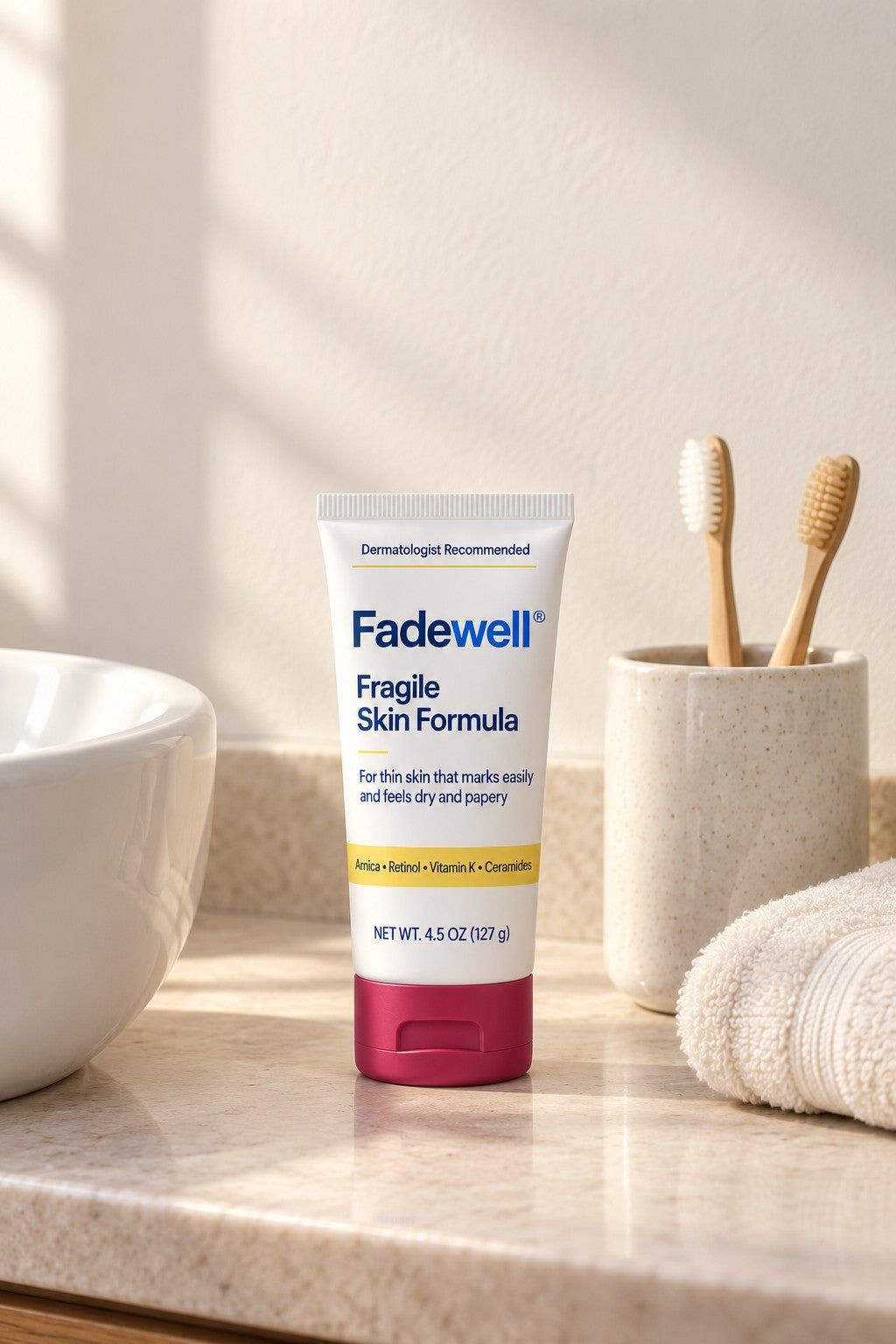
Vitamin K and Arnica montana are the formula’s bruise-care ingredients.
Read here: scroll through the guide or use Contents to jump to a chapter.
Keep a copy: choose Save PDF. On an iPhone or iPad, use Share, then Save to Files or Books. On Android or a computer, use the PDF viewer’s download or save option. The saved PDF works offline.
Print: open the PDF and choose Print. Select Letter or A4 paper and “Fit to page.” You can print the whole guide or just page 12 for your routine reminder.
THE FADEWELL GUIDE · BY RENUVALE
Why the marks linger.
How your cream fits into your day.
WELCOME
A purple patch starts to fade. Then another appears nearby. Your arm can end up carrying fresh purple marks and older brown discoloration at the same time.
There are two things to understand: what happens to the blood beneath an existing mark, and why the surrounding skin can mark so easily again.
That is why Fadewell is used across your forearms and the backs of your hands—not just dabbed onto whichever patch looks darkest today.
This guide explains what each ingredient is there to do, what changes to look for, and how to remember both daily applications. The reminder is something you already do: brush your teeth, then apply Fadewell.
The Renuvale team
01 · WHY IT HAPPENS
The mark can look far more dramatic than the contact that caused it. The skin around the tiny blood vessels helps explain why.
Tiny vessels sit beneath your skin, surrounded by supporting tissue that includes collagen. Think of that tissue as cushioning. Aging and years of sun exposure can thin that support, leaving the vessels less protected.
Now a light knock or pressure can damage a small vessel. Blood leaks into the surrounding skin, where it becomes visible as a flat purple patch.
Simplified illustration of a leak beneath the skin—not a treatment-results image.
Clearing the blood from one patch does not automatically restore the support around the other vessels. The surrounding skin can still mark easily. That is why a fresh patch may appear while an older one is fading.
This recurring pattern on older forearms and hands is often called solar or actinic purpura. Other causes of bruising exist too; a clinician can confirm what is happening with your skin.
The visible mark is one part of the problem. The easily marked skin around it matters too.
02 · WHY COLOR LINGERS
The purple color comes from blood that has escaped a tiny vessel. As your body breaks that blood down, some marks leave brownish pigment behind.
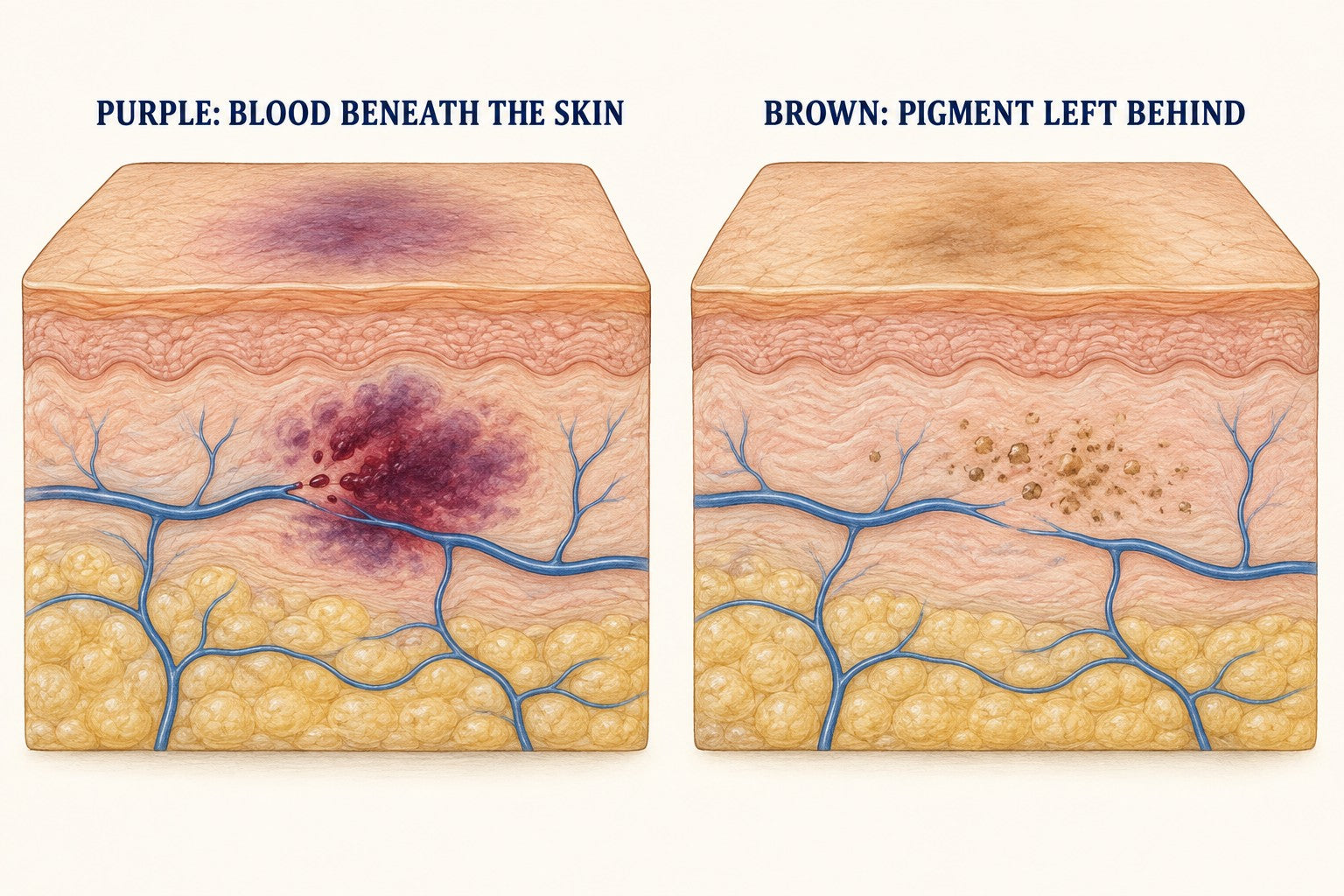
Your body gradually breaks down and absorbs the leaked blood. These purple marks commonly take one to three weeks to clear.
Residual pigment can remain after the purple has faded. Not every mark leaves it, and not every brown spot is from an old bruise.
A new purple patch can appear before older discoloration is gone. That overlap helps explain why your arm may still look marked even though an individual patch has faded.
A moisturizer can make the surface feel softer while the purple underneath is still visible. Concealer can cover the color while you wear it. Protective clothing can reduce some rubbing and sun exposure.
Softening dry skin, covering a mark, and caring for easily marked skin are different things. One does not automatically do the others.
That is the thinking behind Fadewell’s combination of ingredients: care for more than the single patch you can see today.
A softer arm and a less visibly marked arm are different changes. Your routine should help you understand both.
03 · WHY THESE INGREDIENTS
Apply Fadewell morning and evening. The ingredients are already combined—you do not need to layer five separate products.
Vitamin K and Arnica montana are the formula’s bruise-care ingredients.
Glycolic acid works at the surface. Retinol contributes to the formula’s longer-term skin-care approach.
Ceramides support the outer barrier, helping skin feel softer and less tight.
These jobs explain why your cream is more than a dab of moisture on a dark spot. They also explain why every benefit should not be expected on the same day.
You do not need to remember every ingredient name. Remember this: apply to both forearms and the backs of your hands, morning and night.
YOUR FORMULA · VITAMIN K & ARNICA

VITAMIN K
Vitamin K is best known for its role in the body’s normal clotting process. In topical skin care, it is used in formulations aimed at the appearance of bruising.
Fadewell includes vitamin K as part of its approach to visible marks. The cream combines it with ingredients that care for dry skin and support skin renewal.
ARNICA MONTANA
Arnica montana is a flowering plant used in topical bruise-care preparations. It is selected for helping with the appearance of bruises as they fade.
The useful outcome is easy to picture: spending less time with a dark patch sitting on your arm. Arnica is the ingredient in this pair most closely associated with that fading job.
These ingredients are part of the cream’s approach to marks. The next pair addresses a different concern: the skin around them.
Topical ingredient studies vary by preparation and type of bruising. Results are individual; no single ingredient guarantees that a mark will clear by a particular day.
YOUR FORMULA · GLYCOLIC ACID & RETINOL
Once a mark fades, the skin around those tiny vessels still needs care. That is the longer-term part of the routine.
GLYCOLIC ACID
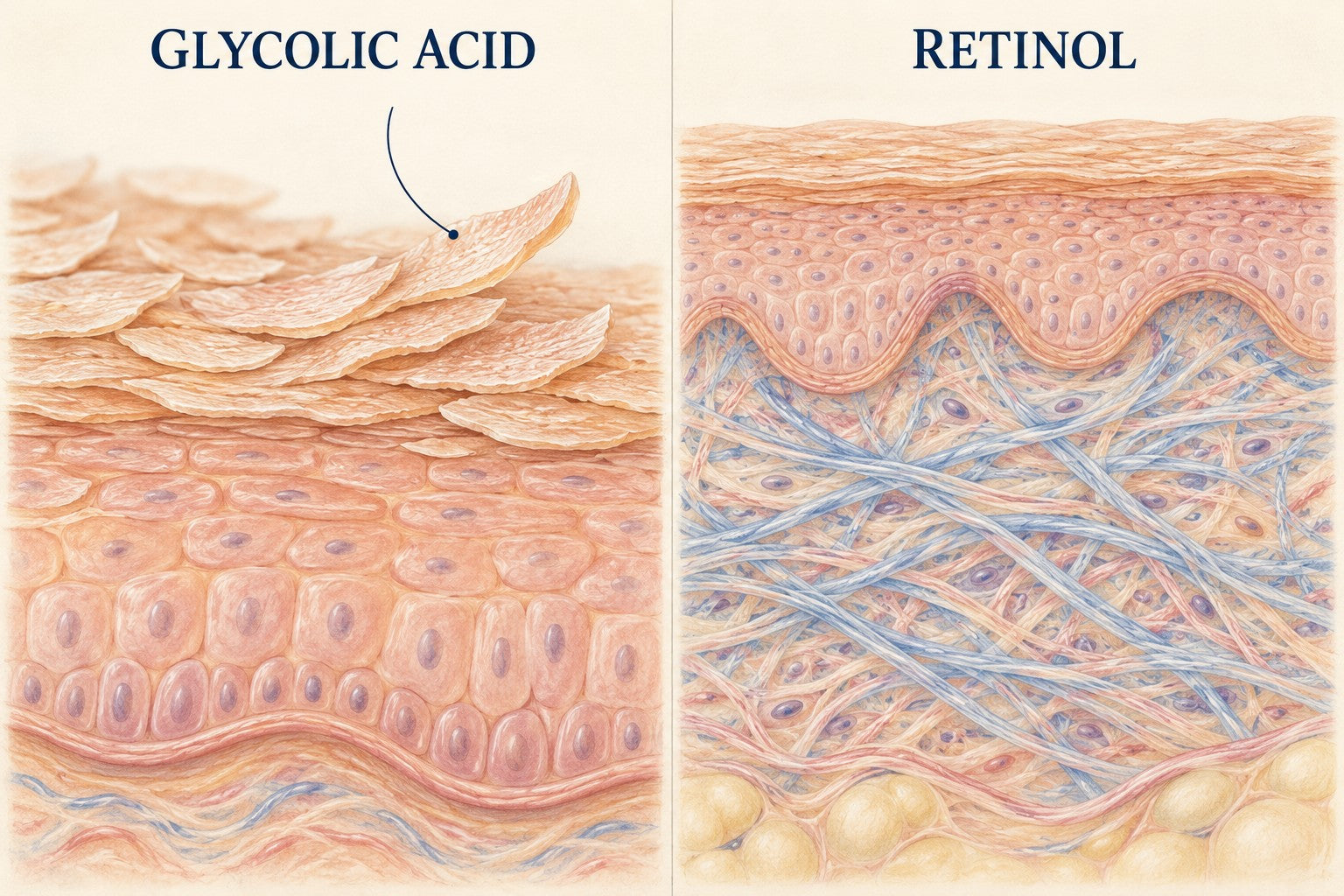
Glycolic acid helps loosen the bonds between old surface cells so they can shed. That helps renew the outer layer instead of leaving dry buildup sitting on top.
Its job is surface care. You do not need to scrub the area or add a separate exfoliating product.
RETINOL
Retinol is a form of vitamin A that helps skin renew and supports collagen production. Collagen gives skin structure and forms part of the supporting tissue around small blood vessels. That is why retinol belongs in the longer-term part of the formula.
That is a reason to keep applying the cream after one patch fades: the surrounding skin still needs care. You cannot judge those gradual changes from one application.
Keep caring for the whole area, rather than remembering your cream only when a new patch appears.
Follow the product directions. Adding other retinol or acid-based products can increase irritation; ask your clinician before combining active treatments.
YOUR FORMULA · CERAMIDES
The cream also cares for the dry, tight, papery feeling that can surround the marks.
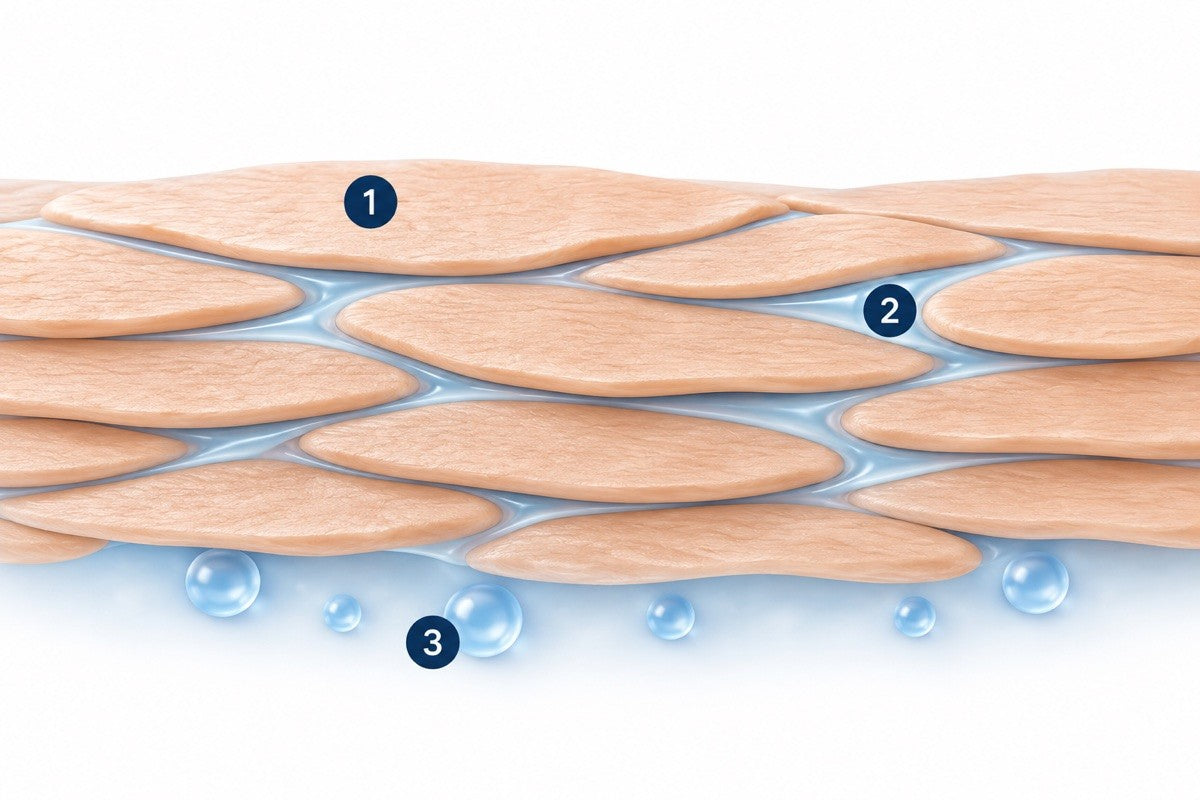
1Skin cells form the outer layer.
2Fats between the cells help seal in moisture. Ceramides are part of these fats.
3Water stays in the skin more effectively when the barrier is working well.
When the barrier loses moisture, skin can feel dry and tight. Fadewell’s ceramides help support that moisture seal, so the surface feels softer and more comfortable.
This may be the first change you notice. A purple mark can still be visible while the surrounding skin feels less papery. Those observations can both be true.
Softer skin does not mean a purple patch should already be gone.
Simplified illustration of the outer moisture barrier.
04 · YOUR MORNING-AND-NIGHT ROUTINE
You already have a morning and evening habit. Let it remind you to use the cream.
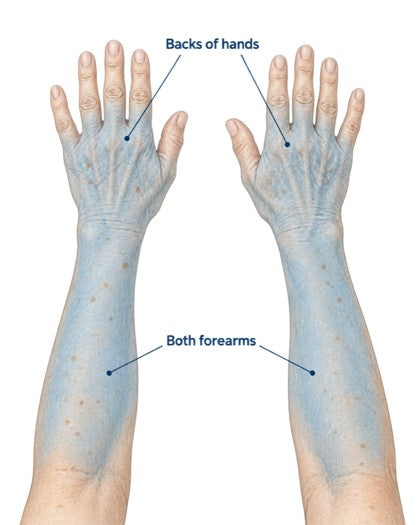
Include areas with no visible marks. Massage gently until absorbed, following your packaging directions.
If you shower during that routine, shower first and apply afterward. Choose a suitable spot where you will see the cream when brushing your teeth, following the storage directions and keeping it away from children.
You do not need another daily decision. Finish brushing, then use Fadewell.
05 · WHAT TO EXPECT
Look for changes in three things: how your skin feels, how an individual mark fades, and how often new marks appear.
Moisture care is the earliest part of the routine you may feel: less dryness or tightness, followed by a more supple surface. This is different from deeper skin-support changes.
This is the mark-level change the formula is designed to work toward. Look for it when a new mark appears; you do not need to wait for a particular week.
When marks are fainter and fade faster, fewer dark patches overlap on the arm. That is different from having fewer new marks in the first place.
The aim is fewer new marks, with those that do appear remaining smaller and lighter. Continued whole-area care supports the longer-term part of the routine.
Over time, the goal is less overlap of fresh purple patches and old discoloration—so the marks take up less of what you see when you look at your arms.
06 · KEEP THE ROUTINE SIMPLE
The skin without a mark needs care too. Apply across both forearms and the backs of your hands, including areas with no visible marks. You do not need to wait for a new purple patch to appear there.
Return to the directed routine at your next usual application. Do not use extra cream to make up for it. Keep the toothbrushing cue so remembering is easier next time.
That can happen. Moisture changes at the surface and fading beneath it are different processes. The early softer feel is not a reason to expect every mark to have disappeared.
Fadewell already includes retinol and glycolic acid. More products do not necessarily mean better results and can increase irritation. Ask your clinician about using other active treatments on the same area.
Stop if irritation occurs. If irritation persists, bruising changes unexpectedly, or you have a medical concern, seek professional advice rather than applying more or simply waiting longer.
YOUR DAILY REMINDER
Read the directions on your tube and patch-test on a small area for two days.

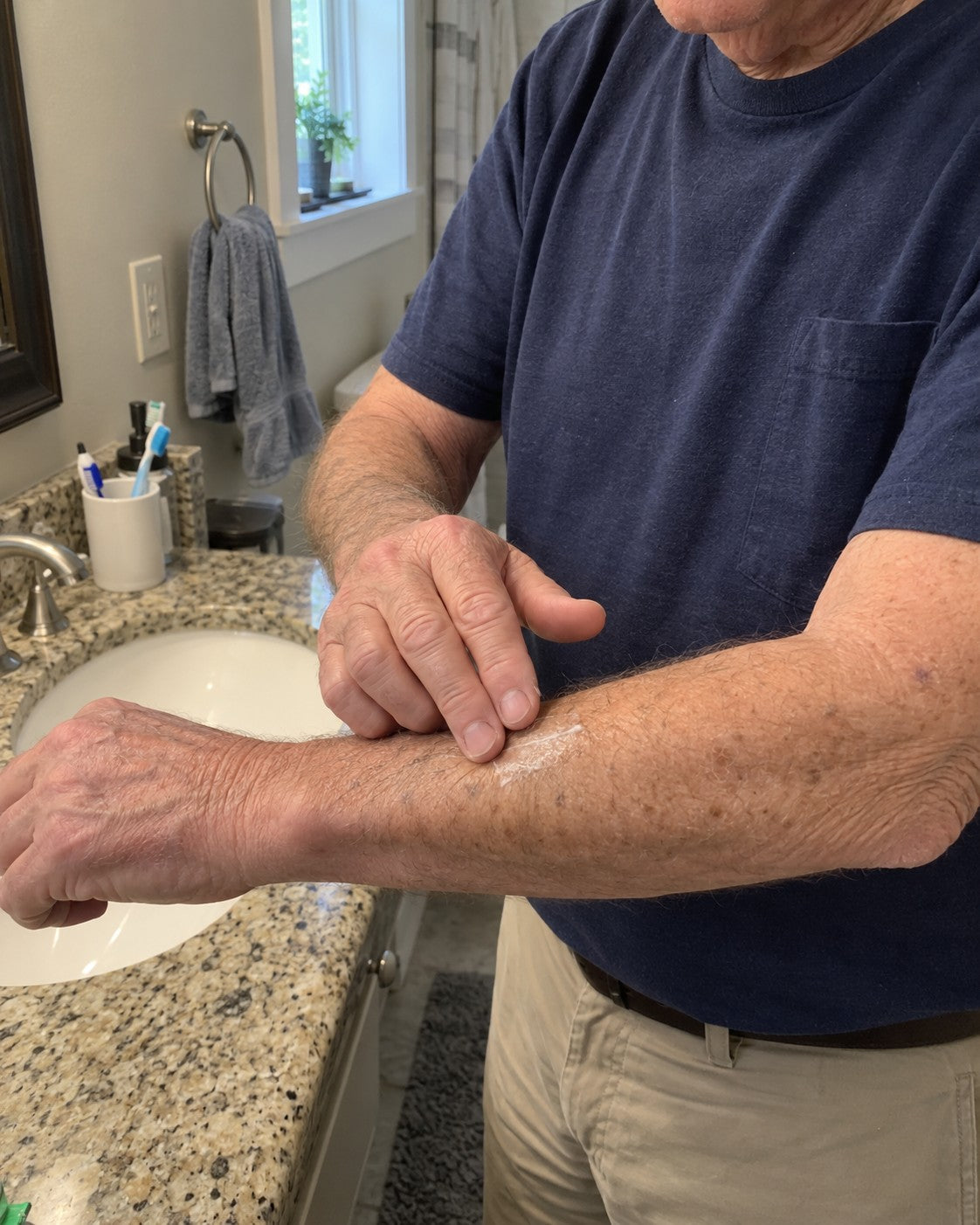
Apply after brushing your teeth. If you shower, shower first.
Include areas with no visible marks.
Follow the application directions on your tube.
Stop use if irritation occurs. Follow the sun-care precautions on the next page.
USE & FURTHER READING
Fadewell contains an alpha hydroxy acid (AHA), which can increase sensitivity to sunlight and the chance of sunburn. Use sunscreen, wear protective clothing, and limit sun exposure while using it and for one week afterward. Fadewell is not a sunscreen.
For external use only. Avoid contact with eyes. Keep out of reach of children. Stop use if irritation occurs. If you take an anticoagulant, speak with your doctor before use.
A sudden increase in bruising, unexplained bruises, or other unusual bleeding deserves medical advice. This guide does not diagnose the cause of your marks.
The guide highlights selected ingredients; your packaging carries the complete list. Ingredient research is not a clinical test of the finished Fadewell formula. Individual results vary.